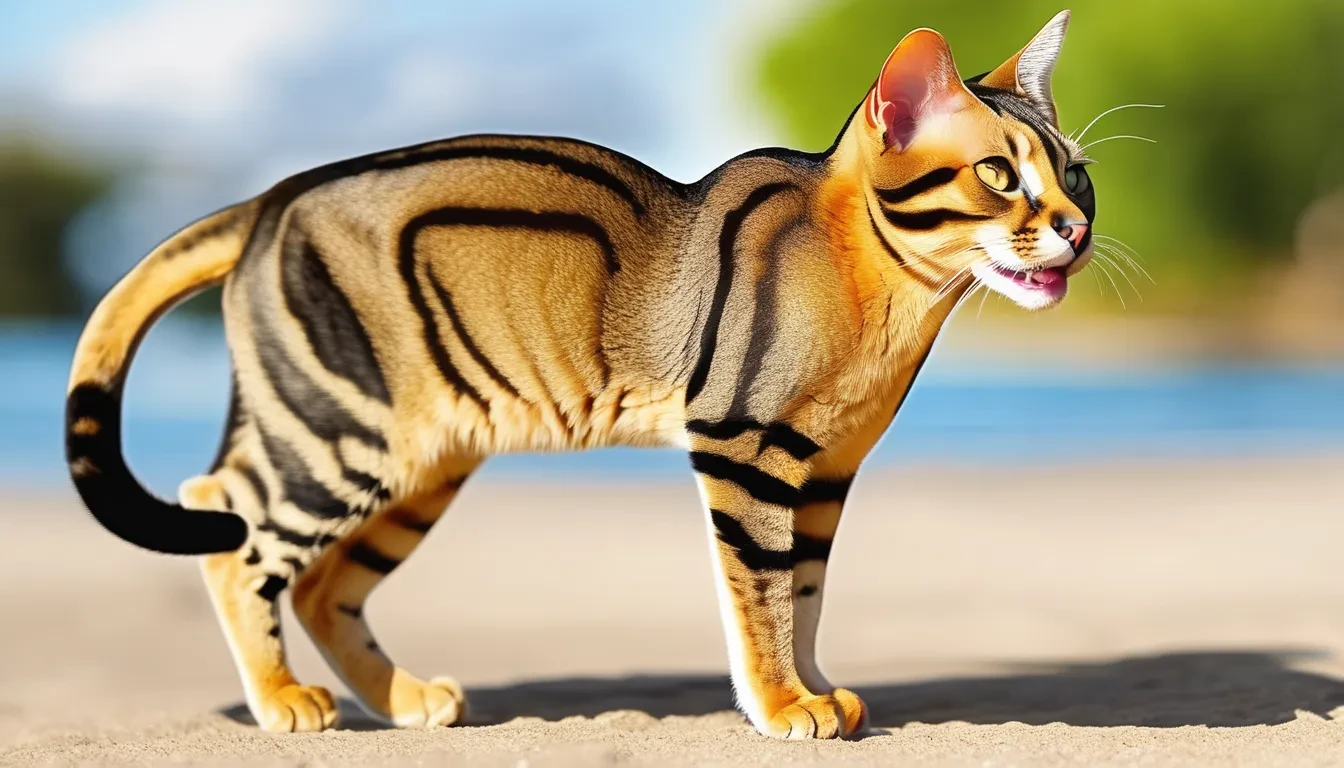
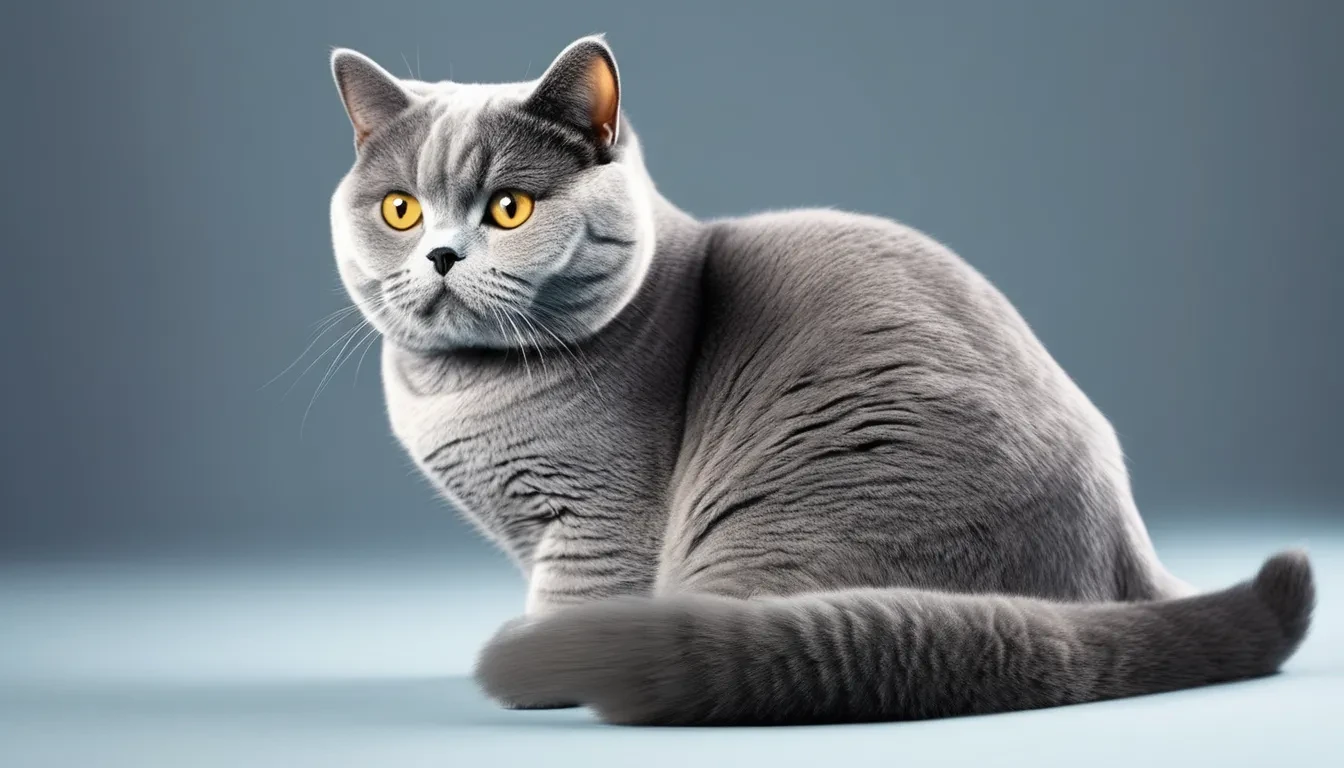
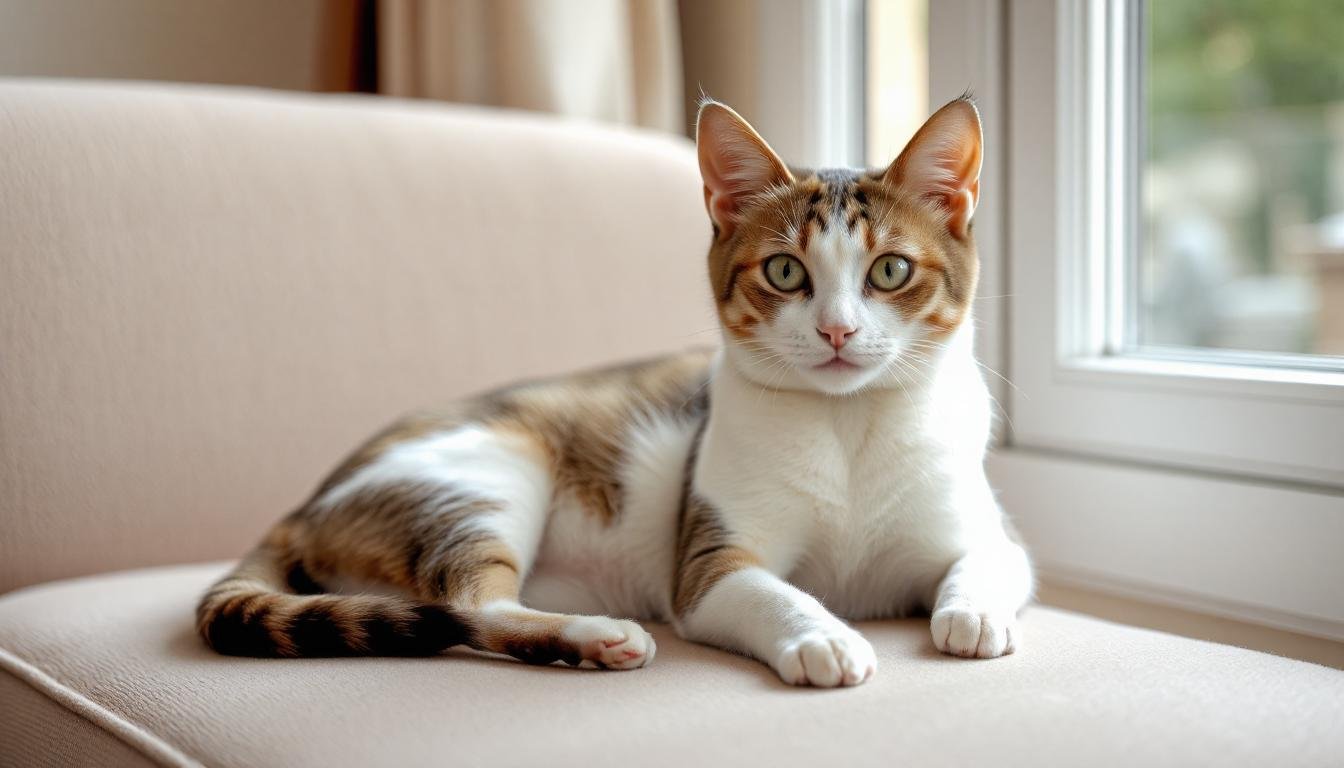
If you’re looking for a cat that embodies both elegance and adventure, the Chausie might be your perfect match. These captivating felines, with their striking, spotted coats, wild-like appearances, and energetic personalities, often draw comparisons to miniature jungle cats. But don’t let their exotic looks fool you: Chausie cats are known for their affectionate, playful, and often mischievous personalities.
A Journey of Breeding: The Chausie Cat’s Origins
The Chausie cat’s story is one of careful breeding and a touch of wildness. It all began in the 1960s when breeders in the United States set out to create a domestic cat breed that resembled the elegant, athletic appearance of the jungle cat. They crossed domestic cats with the African wildcat, known for its striking spotted coat and its agile, athletic build.
Early breeders carefully selected cats with desirable characteristics, focusing on maintaining the breed’s wild-like appearance and developing its unique personality. Over time, the Chausie emerged as a distinct breed, known for its striking appearance, its playful, energetic nature, and its affectionate, engaging personality.
The Chausie: A Blend of Wildness and Domesticity
A Striking Spotted Coat: The Chausie’s most distinctive feature is its striking, spotted coat, reminiscent of its jungle cat ancestor. This unique pattern, often described as “marbled” or “swirled,” comes in a variety of colors, including brown, black, silver, and cinnamon. The spots can be either solid or ticked, with the ticked pattern creating a more shimmering, almost iridescent effect.
Muscular Build and Expressive Eyes: The Chausie has a medium-sized, muscular build with strong legs and a sleek, athletic body. Their rounded heads and expressive eyes, often almond-shaped, contribute to their wild-like appearance. The eyes come in a variety of colors, including green, gold, and hazel.
A Variety of Coat Types: The Chausie comes in two coat types: short-haired and long-haired. Both coat types feature the distinctive spotted pattern, each offering its own charm and visual appeal.
A Case Study: The Adventures of Simba
Simba, a 5-year-old Chausie, is a perfect example of the breed’s unique personality. His owner, David, describes him as “a playful goofball with a heart of gold.”
“Simba is always up for a good time,” David laughs. “He loves to play fetch with his toys, and he’s even learned to jump through hoops. He’s a bit of a comedian, always finding new ways to entertain us.”
Simba’s spotted coat adds to his unique charm. “He’s like a little jungle cat,” David says. “His coat is soft and smooth, and it’s always fun to brush him and watch him purr with contentment.”
Personality and Temperament:
Affectionate and Playful: Chausie cats are known for their affectionate and playful personalities. They crave human companionship and love to be petted and cuddled. They’re often described as being “dog-like” in their loyalty and devotion to their owners, often following them around the house and participating in their daily activities.
Active and Energetic: Chausie cats are active and energetic. They enjoy interactive games, chasing toys, and exploring their surroundings. They often require more exercise and playtime than other breeds.
Intelligent and Curious: Chausie cats are highly intelligent and curious, eager to learn new things and explore their environment. They’re often quick to pick up tricks and enjoy puzzles and games that challenge their minds.
The Chausie: A Detailed Look
A Breed with a Short History: The Chausie is a relatively new breed, having been recognized by cat registries in the late 20th century. However, the breed has quickly gained popularity for its striking appearance and its affectionate nature.
A Rare Breed: The Chausie is considered a rare breed, as it takes careful breeding programs to maintain its distinctive spotted coat and ensure its health.
Health and Lifespan:
Generally Healthy: Chausie cats are generally a healthy breed. They’re known for their robust constitution and strong immune systems. However, they’re prone to some common feline health issues, such as hypertrophic cardiomyopathy (HCM) and polycystic kidney disease (PKD). Regular veterinary checkups and preventive care are crucial to ensure their well-being.
Lifespan: Chausie cats typically have a lifespan of 12 to 15 years, with proper care and attention.
Grooming:
Minimal Grooming: The Chausie’s short coat requires minimal grooming. A weekly brushing with a soft brush is usually sufficient to remove loose hair and keep their coat healthy and shiny.
Living with a Chausie:
Active Lifestyle: Chausie cats are active cats and need plenty of exercise and mental stimulation. Provide them with climbing trees, scratching posts, and interactive toys to keep them entertained. They often require more playtime than other breeds, so make sure you’re prepared for their high energy levels.
Socialization: Early socialization is crucial for Chausie cats to develop into well-adjusted cats. Introduce them to other pets and people from a young age to help them become comfortable in different environments.
Is the Chausie Right for You?
The Chausie is an excellent choice for owners seeking a playful, affectionate, and intelligent companion. They’re adaptable and social cats, making them well-suited for families with children and other pets. However, Chausie cats are high-energy cats with specific needs. Consider these factors before welcoming a Chausie into your home:
Are you ready for a playful and energetic cat who needs a lot of exercise and playtime?
Can you provide a stimulating environment with plenty of climbing opportunities and toys?
Do you have the time and resources to meet their needs?
If you can answer “yes” to these questions, then a Chausie might be the perfect fit for you.
The Chausie: A Unique and Rewarding Experience
The Chausie is more than just a cat with a spotted coat. They’re a unique and captivating breed with a personality that’s both charming and endearing. Their playful nature, intelligence, and affectionate temperament make them an excellent choice for cat lovers seeking a loyal and rewarding companion.
A Look Deeper into the Chausie’s Personality
The Independent Side of the Chausie: While they’re known for their affectionate nature, Chausie cats can also be quite independent. They enjoy their own company and often find ways to entertain themselves. This independent streak makes them well-suited for owners who are out of the house for part of the day, as long as they have adequate stimulation and enrichment.
The Adventurous Chausie: These cats are naturally curious and love to explore. They’re often found venturing into new areas of the house, investigating objects, and climbing to high places. If you have a cat tree or other climbing structures, your Chausie will likely make good use of them. They may even enjoy outdoor adventures in a safe, enclosed space.
The Curious and Inquisitive Nature: Chausie cats are highly intelligent and observant. They’re often seen watching their owners with keen interest, observing their routines and activities. This curiosity makes them entertaining companions, as they’re always learning and adapting to new situations.
Training a Chausie:
A Quick Learner: Chausie cats are relatively easy to train, thanks to their intelligence and eagerness to please. They can learn simple tricks, such as fetching toys, coming when called, and jumping through hoops.
Positive Reinforcement: The key to training a Chausie is positive reinforcement. Use treats, praise, and play to motivate them and reward desired behaviors.
The Importance of Socialization:
Social Butterflies: Chausie cats are known for being social cats, but early socialization is still important for their well-being. Introducing them to different people, pets, and environments from a young age helps them develop into confident and well-adjusted adults.
Avoiding Negative Experiences: It’s crucial to ensure that Chausie cats have positive early experiences with other animals and people. Negative experiences can lead to fear, anxiety, and aggression.
Conclusion:
The Chausie is a captivating breed with a unique and endearing personality. Their spotted coat, playful nature, and affectionate temperament make them a truly special companion. If you’re looking for a cat who’s both striking and full of character, the Chausie might just be the perfect fit for you.
If you’re looking for a cat that embodies both elegance and warmth, the Chartreux might be your perfect match. These beautiful felines, with their plush, blue-grey coats, large, round eyes, and gentle, affectionate personalities, often draw comparisons to cuddly teddy bears. But there’s much more to the Chartreux than just its striking looks.
A Tale of Ancient Origins: The Chartreux’s History
The Chartreux cat’s story is one of ancient origins and careful preservation. The breed is believed to have originated in the French region of Chartreuse, dating back to the 16th century. The Chartreux was highly prized by monks in the region, who cherished them as companions and relied on them to control rodents in their monasteries.
The Chartreux’s unique blue-grey coat, often described as “slate blue,” was a key factor in its name, referencing the Chartreuse mountains, known for their distinctive blue-grey hue. Throughout the centuries, the Chartreux breed remained largely confined to the Chartreuse region, evolving naturally with minimal human intervention.
The Chartreux: A Study in Elegance
A Plush Blue-Grey Coat: The Chartreux’s most distinctive feature is its plush, blue-grey coat, often described as “slate blue.” This thick, dense fur is incredibly soft and velvety, giving the cat a cuddly and charming appearance. The Chartreux coat sheds minimally and is known for its resilience and ease of grooming.
Large, Round Eyes: The Chartreux has large, round, expressive eyes that come in a variety of shades of gold or copper. These eyes reflect the breed’s gentle and affectionate nature, adding to its captivating charm.
A Medium-Sized Build: The Chartreux has a medium-sized, muscular build with strong legs. Their rounded heads, expressive eyes, and plush coats contribute to their elegant and charming appearance. They are known for their athleticism and gracefulness.
A Case Study: The Adventures of Cloud
Cloud, a 6-year-old Chartreux, is a perfect example of the breed’s unique personality. Her owner, Emily, describes her as “a gentle giant with a heart of gold.”
“Cloud is always up for a cuddle,” Emily says. “She loves to snuggle on the couch and follow me around the house. She’s also very playful, especially with feather toys. She’s a bit of a comedian, always finding new ways to entertain us.”
Cloud’s plush coat adds to her unique charm. “She’s like a walking teddy bear,” Emily says. “Her coat is soft and smooth, and it’s always fun to brush her and watch her purr with contentment.”
Personality and Temperament:
Affectionate and Gentle: Chartreux cats are known for their gentle and affectionate personalities. They crave human companionship and love to be petted and cuddled. They’re often described as being “dog-like” in their loyalty and devotion to their owners, often following them around the house and participating in their daily activities. They are known for their gentle and patient nature, often enjoying the company of children.
Playful and Intelligent: Despite their gentle nature, Chartreux cats are playful and intelligent. They enjoy interactive games, chasing toys, and exploring their surroundings. They’re also known for their curiosity and ability to learn new tricks.
Adaptable and Social: These cats are adaptable and social. They adjust well to different environments and lifestyles, making them great companions for families with children and other pets. They are often described as being friendly and outgoing, enjoying the company of both humans and other animals.
The Chartreux: A Detailed Look
A Breed with a Long History: The Chartreux is a relatively old breed, having been recognized by cat registries in the early 20th century. The breed has gained a devoted following for its unique combination of elegance and personality.
A Rare Breed: The Chartreux is considered a rare breed, as it takes careful breeding programs to maintain its distinctive blue-grey coat and ensure its health.
Health and Lifespan:
Generally Healthy: Chartreux cats are generally a healthy breed. They’re known for their robust constitution and strong immune systems. However, they’re prone to some common feline health issues, such as hypertrophic cardiomyopathy (HCM) and polycystic kidney disease (PKD). Regular veterinary checkups and preventive care are crucial to ensure their well-being.
Lifespan: Chartreux cats typically have a lifespan of 12 to 15 years, with proper care and attention.
Grooming:
Regular Brushing: The Chartreux’s coat requires regular grooming to prevent mats and tangles. Brushing a few times a week is usually sufficient. During shedding season, daily brushing may be necessary.
Occasional Baths: Occasional baths may be necessary to keep the coat clean and free from debris. Choose a cat-specific shampoo and conditioner, and be careful to avoid getting water in their ears.
Living with a Chartreux:
Active Lifestyle: Chartreux cats are active cats and need plenty of exercise and mental stimulation. Provide them with climbing trees, scratching posts, and interactive toys to keep them entertained.
Socialization: Early socialization is crucial for Chartreux cats to develop into well-adjusted cats. Introduce them to other pets and people from a young age to help them become comfortable in different environments.
Is the Chartreux Right for You?
The Chartreux is an excellent choice for owners seeking a gentle, affectionate, and intelligent companion. They’re adaptable and social cats, making them well-suited for families with children and other pets.
Before welcoming a Chartreux into your home, consider these factors:
Are you ready for a playful and energetic cat?
Can you provide regular playtime and mental stimulation?
Do you have the time and resources to meet their needs?
If you can answer “yes” to these questions, then a Chartreux may be the perfect fit for you.
The Chartreux: A Unique and Rewarding Experience
The Chartreux is more than just a cat with a plush, blue-grey coat. They’re a unique and captivating breed with a personality that’s both charming and endearing. Their playful nature, intelligence, and affectionate temperament make them an excellent choice for cat lovers seeking a loyal and rewarding companion.
A Look Deeper into the Chartreux’s Personality
The Independent Side of the Chartreux: While they’re known for their affectionate nature, Chartreux cats can also be quite independent. They enjoy their own company and often find ways to entertain themselves. This independent streak makes them well-suited for owners who are out of the house for part of the day, as long as they have adequate stimulation and enrichment.
The Adventurous Chartreux: These cats are naturally curious and love to explore. They’re often found venturing into new areas of the house, investigating objects, and climbing to high places. If you have a cat tree or other climbing structures, your Chartreux will likely make good use of them.
The Curious and Inquisitive Nature: Chartreux cats are highly intelligent and observant. They’re often seen watching their owners with keen interest, observing their routines and activities. This curiosity makes them entertaining companions, as they’re always learning and adapting to new situations.
Training a Chartreux:
A Quick Learner: Chartreux cats are relatively easy to train, thanks to their intelligence and eagerness to please. They can learn simple tricks, such as fetching toys, coming when called, and jumping through hoops.
Positive Reinforcement: The key to training a Chartreux is positive reinforcement. Use treats, praise, and play to motivate them and reward desired behaviors.
The Importance of Socialization:
Social Butterflies: Chartreux cats are known for being social cats, but early socialization is still important for their well-being. Introducing them to different people, pets, and environments from a young age helps them develop into confident and well-adjusted adults.
Avoiding Negative Experiences: It’s crucial to ensure that Chartreux cats have positive early experiences with other animals and people. Negative experiences can lead to fear, anxiety, and aggression.
Conclusion:
The Chartreux is a captivating breed with a unique and endearing personality. Their plush, blue-grey coat, playful nature, and affectionate temperament make them a truly special companion. If you’re looking for a cat who’s both elegant and full of character, the Chartreux might just be the perfect fit for you.
If you’re searching for a cat that combines a unique look with a gentle, affectionate personality, the Chantilly-Tiffany might be exactly what you’re looking for. Often simply called the “Tiffany” or the “Chantilly,” these cats carry a soft, semi-long coat and a temperament that’s been compared to a small, devoted dog more than a typical aloof housecat. They’re rare, a little mysterious, and once you understand their story, you’ll see why cat lovers who find one rarely forget them.
This guide covers everything about the Chantilly-Tiffany — where the breed actually came from (there’s a genuinely strange history here involving a case of mistaken identity with the Burmese breed), what they look like, how they behave, what it takes to care for one properly at every life stage, and how to figure out if this breed fits your household. We’ll also walk through several real-world case studies to show what living with one of these cats actually looks like day to day, month to month, and year to year.
A Journey of Breeding: The Chantilly-Tiffany’s Real Origins
The story of this breed is one of the stranger tales in the cat fancy world, full of mixed-up names, near extinction, and a decades-long identity crisis that still confuses people today.
The Accidental Beginning
It began in 1967 (some records point to 1969), when a New York breeder named Jennie Robinson purchased a pair of chocolate-colored, longhaired cats of unknown ancestry. These cats — often referred to in breed records as Thomas and Shirley — produced kittens that were dark, solid-colored, with a plush, silky semi-long coat unlike anything commonly seen at the time. Because the coat color and eye tone resembled the Burmese breed, and because Robinson also happened to breed Burmese cats, word spread that these new kittens were simply “longhaired Burmese.”
That assumption turned out to be completely wrong, but it stuck around for years anyway. Robinson herself later confirmed that the kittens were born dark-colored with pink paw pads — the opposite of how Burmese kittens are born, since Burmese kittens arrive lighter-coated with dark paw pads that darken with age. No Burmese cats were ever used in the breeding program, and genetically, the two breeds aren’t related at all. Still, the myth of the “longhaired Burmese” followed the breed around for decades and caused real problems for its recognition, showing up in cat encyclopedias and breed books that repeated the error without verifying it.
The First Name Change
Robinson originally registered the breed under the name “Foreign Longhair,” a fairly generic, descriptive label common for new breeds at the time. Breeders later decided they wanted something more distinctive and elegant-sounding, and renamed it “Tiffany.” Unfortunately, this created an entirely new headache: Britain’s Governing Council of the Cat Fancy already had a breed called the “Tiffanie,” created in 1981 from a cross between a lilac Burmese female and a silver chinchilla Persian male, as part of the same breeding program that produced the Burmilla. The British Tiffanie is a completely separate breed with an entirely different genetic background, yet the near-identical name caused constant confusion among breeders, judges, and cat owners on both sides of the Atlantic for years.
The Lund Years and a Near-Extinction
In the 1970s, a Canadian breeder named Sigyn Lund became heavily involved with the developing breed and worked to refine its coat quality and body type, at one point theorizing a connection to the old Angora lineage, given the similarities in coat texture. Lund’s efforts helped stabilize some of the breed’s defining characteristics during this period.
However, when Lund stopped breeding in the mid-1980s, the number of remaining cats dropped so low that the breed came dangerously close to disappearing altogether. Registries began dropping the breed from their active lists simply because there weren’t enough registrations to justify keeping it. For a few years, it genuinely looked like the Chantilly-Tiffany story might end there.
The Rescue
The breed was saved — effectively twice over — by a Canadian fancier named Tracy Oraas, who fell in love with the cats in 1988 after encountering one and becoming fascinated by its combination of look and temperament. Oraas did extensive detective work into the breed’s actual genetic history and confirmed once and for all that Burmese cats had never been part of the program, finally putting the persistent rumor to rest with documented evidence.
She and fellow breeder Jan DeRegt then rebuilt the bloodline using careful outcrosses to European Angoras, Havana Browns, Somalis, and Nebelungs to widen the gene pool and secure the breed’s future. This deliberate outcrossing strategy is actually one of the more important details in the breed’s health story today, since it means the modern Chantilly-Tiffany doesn’t trace back to a narrow founder population the way some more tightly bred pedigree cats do.
One Final Rename
In 1992, to finally resolve the ongoing name conflict with the British Tiffanie, the breed was renamed one final time: Chantilly, giving us the “Chantilly-Tiffany” name still used interchangeably today. The name was chosen deliberately to preserve some of the elegance the original “Tiffany” name represented, while sidestepping the ongoing confusion with the unrelated British breed.
A Parallel Discovery in Canada
Interestingly, around the same period Robinson and Lund were developing their line in the United States, a separate, unrelated litter of similar longhaired, semi-foreign, chocolate-colored kittens turned up in Canada from a stray mother of unknown origin in 1973. Once again, the kittens were carbon copies of their mother — dark, solid-colored, silky-coated. This essentially identical look emerging independently, from unrelated cats, suggests this particular combination of traits may have surfaced more than once from similar recessive genetic building blocks already present in the general domestic cat population.
Where the Breed Stands Today
Today, the Chantilly-Tiffany remains one of the rarest recognized cat breeds in North America. Major registries including the American Cat Association (ACA) and The International Cat Association (TICA) currently show essentially no active pedigreed breeding programs for the breed, meaning very few, if any, true pedigreed Chantilly-Tiffany kittens are being produced anywhere. Cats carrying Chantilly-Tiffany heritage do still exist, often as mixed-breed descendants scattered through rescues and informal breeding lines, and their charm hasn’t faded even as pure pedigree lines have become nearly impossible to find.
The Chantilly-Tiffany: A Study in Beauty
A Silky, Semi-Long Coat
The Chantilly-Tiffany’s defining physical feature is its coat: soft, silky, and semi-long, without a thick undercoat, which actually makes grooming easier than you’d expect from a longer-haired breed. The coat lies close to the body rather than standing out in a full plume like a Persian’s, giving the cat a sleek, elegant silhouette rather than a fluffy, rounded one. A plumed tail, a soft ruff around the neck, and tufted ears add to the overall refined look, especially once the coat reaches full maturity.
The breed is accepted in several solid colors, with rich chocolate being the most iconic and well-known — often the color people picture first when they hear “Chantilly-Tiffany.” Other accepted colors include cinnamon, blue, lilac, and fawn, along with tabby patterns, including mackerel, spotted, and ticked tabby variations. So while a ticked coat pattern can appear on a Chantilly-Tiffany, it’s one option among several rather than the breed’s single defining trait, and it’s worth knowing this if you’ve encountered older or inaccurate descriptions of the breed elsewhere online.
Coat Development Over Time
One detail that surprises new owners: Chantilly-Tiffany cats are late bloomers when it comes to their coat and coloring. Kittens are born quite dark, and the coat doesn’t reach its full color depth and silky texture until the cat is around two years old. Owners sometimes worry in the first year that their cat’s coat looks a bit thin or uneven compared to photos of adult cats, but this is entirely normal — patience pays off here. Eye color also intensifies with age, deepening from a lighter gold tone in kittenhood into a richer amber or copper shade as the cat matures into its second year.
Expressive Eyes and Facial Structure
Large, oval to almond-shaped eyes are another hallmark of the breed, typically ranging from gold to amber, occasionally appearing green in certain color variations. Combined with high cheekbones and a gently rounded head, the overall facial expression tends to look alert, curious, and a little mischievous — which, as you’ll see throughout this guide, matches the personality perfectly. The ears are medium-sized, set moderately apart, and often carry decorative tufts of longer fur at the tips, adding to the breed’s slightly wild, elegant look.
A Medium, Semi-Foreign Build
Physically, the Chantilly-Tiffany has what breed standards call a “semi-foreign” body type — not as compact and rounded as a British Shorthair, and not as long and svelte as an Oriental Shorthair, but somewhere comfortably in between. Adult cats typically weigh somewhere between 6 and 15 pounds depending on sex and individual build, with males generally running larger than females. The legs are proportionate rather than especially long, the body is muscular without looking bulky, and the overall impression is one of moderate, balanced athleticism rather than extreme features in any direction. The tail is long, tapering, and heavily plumed with fur, often described as one of the breed’s most eye-catching features when the cat is in motion.
Growth Stages and Physical Milestones
Kittens grow rapidly in their first six months, reaching most of their adult height and length by around eight to ten months, though they’ll continue filling out in weight and muscle for another year or more. Full physical and coat maturity — including final eye color and complete coat texture — typically isn’t reached until somewhere between eighteen months and two years of age, which is later than many other breeds. This slow-maturing quality is part of why long-term Chantilly-Tiffany owners often say the cat “keeps getting more beautiful” through its first couple of years.
A Case Study: The Adventures of Luna
Luna, a 4-year-old Chantilly-Tiffany, is a great example of the breed’s personality in action. Her owner, David, describes her as “a playful goofball with a heart of gold.”
“Luna is always up for a good time,” David says. “She loves to play fetch with her toys, and she’s even learned to jump through a small hoop we set up in the living room. She’s a bit of a comedian — always finding new ways to get our attention, whether that’s knocking something off a shelf on purpose or ‘talking’ to us until we respond.”
Luna’s silky chocolate-brown coat is one of her most noticeable features. “It’s like a soft, shimmering blanket,” David says. “It’s smooth to the touch, doesn’t tangle much, and she absolutely loves being brushed. She’ll flop right over and start purring the second the brush comes out.”
David also notes how attached Luna is to the household’s routines. “She follows me from room to room like a little shadow. If I’m cooking, she’s sitting on the counter’s edge supervising. If I’m working from home, she’s on the desk. She’s not needy exactly, but she definitely wants to be wherever the people are.”
Interestingly, Luna took nearly two full years to develop the deep, rich chocolate color she has now. “When we first got her, she was a lot lighter and honestly a bit patchy-looking,” David recalls. “We didn’t realize that was normal for the breed until we did some research, and sure enough, by her second birthday she’d filled out into this gorgeous, even, dark coat. It was worth the wait.”
A Second Case Study: Milo’s Adjustment Story
Not every Chantilly-Tiffany arrives in a home with a documented, easy history. Milo, now believed to be around 6 years old, was adopted from a shelter by a family named the Hendersons after being surrendered by a previous owner who could no longer care for him. Unlike Luna, Milo came in cautious and withdrawn, hiding under furniture for the first several days.
“We almost thought we’d made a mistake,” says Sarah Henderson. “He wouldn’t come out except to eat in the middle of the night. But we’d read that this breed needed patience and positive experiences to open up, so we just let him set the pace.”
Over the course of about six weeks, using slow, low-pressure interactions, treats tossed gently in his direction rather than forced handling, and a consistent daily routine, Milo gradually began spending more time in open rooms. “The turning point was honestly a feather wand toy,” Sarah laughs. “One evening he just couldn’t resist it, and after that first play session, something clicked. Within another month he was sleeping on the bed and following us around like he’d always lived here.”
Milo’s story is a useful reminder that while the breed’s reputation for sociability is well-earned, individual cats — especially those with an unknown or difficult past — may need time, patience, and consistent gentle handling before that trademark Chantilly-Tiffany warmth fully shows itself.
Personality and Temperament
Affectionate and Playful
Chantilly-Tiffany cats are known for being deeply affectionate and genuinely playful well into adulthood, unlike some breeds that mellow out significantly with age. They crave human companionship and are happiest when they can be near their people — on a lap, on a desk, or simply in the same room doing their own thing while keeping half an eye on the household. Owners frequently describe the breed as “dog-like” in loyalty, since these cats will often follow their favorite person from room to room and want to be involved in whatever is happening around the house, from folding laundry to working at a computer.
The Breed’s Distinctive Voice
Chantilly-Tiffany cats also tend to be quite vocal, though not in the loud, demanding way associated with breeds like the Siamese. They communicate through soft chirps, trills, and a pigeon-like cooing sound rather than harsh, insistent meowing, which many owners find charming rather than disruptive. This vocal style tends to show up most during greetings, requests for attention, and moments of excitement, like watching birds through a window.
Intelligent and Curious
This is a genuinely smart breed. Chantilly-Tiffany cats are eager to explore their surroundings, investigate new objects, and figure out how things work — including, occasionally, how to open cabinet doors or unlatch simple locks. They pick up on household routines quickly and are often quick learners when it comes to simple tricks and interactive games, which makes them rewarding companions for owners who enjoy engaging with their pets beyond basic feeding and petting.
Adaptable and Social
These cats generally adjust well to a variety of environments and lifestyles, which makes them a solid match for families with children, other cats, and even dogs, provided introductions are handled with patience. They tend to be friendly and outgoing rather than shy or reserved, and they typically enjoy the company of familiar people and pets alike. Many owners report that their Chantilly-Tiffany greets guests at the door rather than hiding, at least once initial shyness (if any) wears off.
A Moderate, Balanced Temperament
Unlike some high-energy Oriental breeds, the Chantilly-Tiffany strikes a more moderate balance. It’s neither as quiet and low-key as a Persian nor as relentlessly active as a Siamese or Bengal. This “middle ground” temperament is part of why so many owners find the breed easy to live with — playful enough to be entertaining, calm enough to settle down for cuddles without constant demands for stimulation, and generally adaptable enough to fit into households with varying activity levels.
Affection Styles Vary by Individual
While the breed overall leans toward being highly affectionate, individual cats express that affection differently. Some are dedicated lap cats who want to be physically touching their person as much as possible. Others show love more through proximity — staying in the same room, following you around — without necessarily wanting to be held or petted constantly. Understanding your particular cat’s preferred affection style, rather than assuming every cat will want the same type of interaction, tends to lead to a much smoother relationship.
The Independent Side of the Chantilly-Tiffany
While they’re known for their affectionate nature, Chantilly-Tiffany cats can also be surprisingly independent. They enjoy their own company and often find creative ways to entertain themselves, whether that’s batting a toy around solo, watching birds from a window perch, or perching somewhere quiet to observe the household. This independent streak makes them reasonably well-suited for owners who are out of the house for part of the day, as long as the cat has adequate enrichment and doesn’t spend excessive stretches of time completely alone.
That said, don’t mistake this independence for aloofness. Most Chantilly-Tiffany cats still want a meaningful amount of daily interaction, and a cat left alone for very long hours on a regular basis is more likely to develop boredom-related behaviors like excessive vocalizing, destructive scratching, or even changes in litter box habits driven by stress.
The Adventurous Chantilly-Tiffany
These cats are naturally curious and love to explore. It’s common to find them investigating a newly opened cabinet, climbing to the highest available surface, or thoroughly inspecting a grocery bag the moment it’s set down on the floor. If you provide a cat tree or other climbing structures, your Chantilly-Tiffany will likely make regular use of them — height-seeking behavior is a strong instinct in this breed, and giving them vertical space to climb tends to reduce unwanted exploring of counters, bookshelves, and other off-limits surfaces.
This adventurous streak also means Chantilly-Tiffany owners should be extra diligent about cat-proofing their homes, since these cats are more likely than a shy, reserved breed to investigate open drawers, dangling cords, or unattended food.
The Curious and Inquisitive Nature
Chantilly-Tiffany cats are highly observant. Owners often describe the sensation of being quietly watched by their cat throughout the day — while working, cooking, or even just moving from room to room. This isn’t suspicion; it’s genuine interest. These cats pay close attention to routines and patterns, and many will learn to anticipate things like feeding time, the sound of a specific car pulling into the driveway, or the particular drawer where treats are kept. It’s not unusual for owners to report their cat “knowing” it’s a work-from-home day versus an office day, simply based on subtle morning routine cues.
Training a Chantilly-Tiffany
A Quick Learner
Thanks to their intelligence and eagerness to engage with their owners, Chantilly-Tiffany cats tend to be relatively easy to train compared to many other breeds. Simple tricks like coming when called, sitting on command, fetching a small toy, or walking through a hoop are all realistic goals with consistent practice.
Positive Reinforcement Is Key
The most effective approach to training any cat, including this breed, is positive reinforcement — using small treats, verbal praise, and play as rewards for desired behavior. Avoid punishment-based methods entirely; cats don’t respond well to scolding or physical correction, and it tends to damage trust rather than build good habits, sometimes making the unwanted behavior worse by adding fear and stress into the mix. Short, frequent training sessions of just a few minutes at a time work far better than long ones, since cats lose interest quickly and long sessions risk turning a fun activity into a chore for both of you.
Clicker Training Works Well
Many owners find clicker training particularly effective with intelligent, food-motivated breeds like the Chantilly-Tiffany. The click provides a precise, consistent marker for the exact moment the cat performs the desired behavior, which speeds up learning considerably compared to reward-only methods where timing can be imprecise. Getting started is simple: click and immediately treat a few times so the cat associates the sound with a reward, then start clicking only when the cat performs a small step toward the desired behavior.
Step-by-Step: Teaching “Sit”
Hold a treat just above your cat’s nose, close enough that they can smell it but not reach it without moving.
Slowly move the treat backward and slightly up, which naturally encourages the cat’s rear end to lower into a sit as they follow the treat with their head.
The moment their haunches touch the ground, click (if using a clicker) and immediately give the treat.
Repeat several times a day in short sessions, gradually introducing a verbal cue like “sit” right before the motion.
Once the cat reliably sits with the hand motion, start phasing out the treat lure while keeping the verbal cue and reward.
Step-by-Step: Teaching “Come”
Choose a consistent word or sound (a specific word, a clicker, or even a particular whistle) to use exclusively for calling your cat.
Start close by — just a few feet away — and say the cue while presenting a treat.
Reward immediately when the cat approaches.
Gradually increase distance and add distractions once the cat reliably responds at short range.
Practice at different times of day so the behavior generalizes beyond just mealtime.
Leash Training
Given their curious, adventurous streak, some Chantilly-Tiffany owners choose to leash-train their cats for supervised outdoor time. Starting with a properly fitted cat harness (never a collar alone, which cats can easily slip out of or which can cause injury if pulled) indoors, letting the cat get used to wearing it around the house before ever stepping outside, tends to produce the best and safest results. Most cats need several sessions just getting comfortable wearing the harness before leash walks become realistic.
The Importance of Socialization
Social Butterflies — With the Right Start
Chantilly-Tiffany cats are known for being social, but that sociability isn’t purely automatic — early socialization plays a real role in shaping it, as Milo’s case study above illustrates. Introducing kittens to a variety of people, other pets, and everyday environments during their early months helps them grow into confident, well-adjusted adults who handle new situations calmly rather than fearfully.
The Critical Socialization Window
Most behaviorists point to roughly the second through seventh week of a kitten’s life as the most important period for social development, though positive experiences continue to matter well beyond that window. During this stage, gentle handling by a variety of people, calm exposure to normal household sounds (vacuum cleaners, doorbells, television), and supervised, positive introductions to other pets all contribute to a more resilient adult cat.
Avoiding Negative Early Experiences
It’s important that young Chantilly-Tiffany cats have positive early experiences with other animals and people. Rough handling, forced interactions, or frightening encounters during the socialization window can lead to lasting fear, anxiety, or defensive aggression later on. If you’re adopting an older cat or kitten with an unknown history, as with Milo, patience becomes even more important — trust can still be built, it just may take longer, and forcing the process almost always backfires.
Chantilly-Tiffany vs. Similar-Looking Breeds
Because of the naming confusion baked into this breed’s history, it’s genuinely useful to understand how it differs from cats it’s often mixed up with.
Breed
Relationship to Chantilly-Tiffany
Key Differences
Burmese
Not related, despite decades of rumors
Burmese has a short, glossy coat; Chantilly-Tiffany has a semi-long silky coat and different body proportions
British Tiffanie
Separate breed entirely, different origin
Tiffanie descends from a Burmese x Chinchilla Persian cross in the UK; Chantilly-Tiffany has North American origins with no Burmese or Persian involved
Somali
Used historically as an outcross to widen the gene pool
Somali has a fuller “fox-like” ruff and is more consistently ticked; Chantilly-Tiffany allows a wider range of solid colors and patterns
Balinese
Occasionally confused due to semi-long coat
Balinese is a longhaired Siamese with a much more slender, tubular body and blue eyes; Chantilly-Tiffany has a moderate build and gold/amber eyes
Havana Brown
Used historically as an outcross
Havana Brown has a short coat and a distinctly different head shape; contributed genetics but is a separate, short-haired breed
Nebelung
Used historically as an outcross
Nebelung has a blue-grey coat exclusively; contributed to genetic diversity but is a visually distinct breed
Understanding these distinctions matters if you’re trying to track down a cat’s actual heritage or verify a breeder’s claims, since the name “Tiffany” alone has historically been applied to at least two genetically unrelated breeds, and several other breeds share superficial similarities in coat or color.
Health and Lifespan
A Generally Robust Breed
Because the Chantilly-Tiffany’s gene pool was deliberately widened through outcrossing to breeds like the European Angora, Havana Brown, Somali, and Nebelung, the breed doesn’t carry a long list of well-documented, breed-specific hereditary conditions the way some more narrowly bred pedigree cats do. That genetic diversity is generally a good thing for long-term health and is one of the more reassuring parts of this breed’s story for prospective owners.
That said, “generally healthy” doesn’t mean “immune to illness.” Like any cat, Chantilly-Tiffany cats can develop common feline health conditions over their lifetime, and responsible ownership means staying alert to the same general categories of concern that apply to cats broadly.
Kitten-Stage Health Considerations
Parasite screening, since kittens are especially vulnerable to intestinal parasites and fleas
Core vaccinations, following your veterinarian’s recommended schedule
Spay or neuter surgery, typically recommended around five to six months of age unless a veterinarian advises otherwise
Early dental checks, to make sure baby teeth are falling out properly and adult teeth are coming in aligned
Adult-Stage Health Considerations
Dental disease, which affects the majority of cats to some degree by middle age if teeth aren’t cared for consistently
Obesity-related issues, since this is a food-motivated, moderately active breed that can gain weight if overfed or under-exercised
Routine annual bloodwork, which becomes increasingly valuable starting around age seven, even before symptoms appear
Senior-Stage Health Considerations
Kidney function changes, common in aging cats of every breed and best caught early through routine screening
Arthritis and joint stiffness, which can be subtle in cats since they tend to simply move less rather than show obvious limping
Thyroid changes, particularly hyperthyroidism, which becomes more common in cats over ten years old
Heart conditions, which can affect cats of any breed and are best screened for through regular veterinary checkups, particularly as cats age
Because pedigreed lines are so rare today, most modern Chantilly-Tiffany-type cats are actually mixed-breed descendants, which further reduces the odds of concentrated genetic health issues compared to a narrowly maintained pedigree line — another small silver lining tied to the breed’s turbulent history.
Recognizing When Something’s Wrong
Cats in general, and this breed is no exception, are skilled at masking illness until a condition has progressed. Watch for subtle changes like reduced appetite, sleeping even more than usual, hiding more than normal, changes in litter box habits, or a duller coat than usual — any of these warrant a veterinary visit rather than a wait-and-see approach.
Lifespan
With proper care, a Chantilly-Tiffany typically lives between 11 and 15 years, putting it comfortably in line with the average lifespan for a healthy, indoor, medium-sized domestic cat. Some well-cared-for individuals live even longer.
Recommended Veterinary Care Schedule
Annual wellness exams for adult cats, moving to twice-yearly checkups once the cat reaches roughly 7–10 years old
Routine bloodwork starting in the senior years to catch early signs of kidney or thyroid changes before symptoms appear
Consistent parasite prevention, including flea and worm control, year-round regardless of indoor or outdoor lifestyle
Dental checkups, since professional cleanings can prevent much more serious (and expensive) dental disease down the road
Vaccination schedule appropriate to the cat’s lifestyle, discussed with your veterinarian based on indoor/outdoor access and regional risk factors
Grooming
Regular Brushing
The Chantilly-Tiffany’s silky coat requires regular but not excessive grooming to prevent mats and tangles. Because the breed lacks a thick undercoat, brushing two to three times a week is usually sufficient to keep the coat smooth and healthy. During seasonal shedding periods, typically spring and fall, daily brushing helps manage loose fur and reduces the amount of hair that ends up on furniture and clothing.
A stainless steel comb or a soft slicker brush both work well for this coat type. Many owners find that their cats genuinely enjoy the brushing process, as Luna’s story illustrates, since it doubles as a bonding and relaxation activity rather than a chore the cat merely tolerates.
A Simple Seasonal Grooming Calendar
Spring and fall (shedding seasons): daily brushing, extra attention to the ruff and tail
Summer and winter: two to three brushing sessions per week is typically enough
Monthly, year-round: nail trims, ear checks, and a general once-over for mats, especially behind the ears and under the arms where fur tends to tangle first
Occasional Baths
Bathing isn’t a frequent requirement for this breed, but occasional baths can help keep the coat clean, especially if the cat gets into something messy or if you’re preparing for a cat show. Use a cat-specific shampoo and conditioner, since human shampoo can irritate feline skin and disrupt its natural pH balance. Keep water temperature lukewarm, and be careful to avoid getting water directly in the ears. Most cats tolerate bathing better if introduced to it gradually and calmly from a young age rather than as a rare, stressful event later in life.
Nail Trimming and Ear Care
Trim nails every two to three weeks to prevent overgrowth and reduce scratching damage around the house. If you’ve never trimmed a cat’s nails before, ask your veterinarian or a groomer for a demonstration the first time, since trimming too close to the quick can cause pain and bleeding. Check ears weekly for excess wax or debris, and clean gently with a vet-approved ear cleaner if needed — never insert cotton swabs deep into the ear canal, as this can push debris further in or damage the eardrum.
Dental Care
Brushing a cat’s teeth several times a week with a feline-specific toothpaste (never human toothpaste, which can be toxic to cats) is one of the most impactful things an owner can do for long-term health. Dental treats and vet-recommended dental diets can supplement, though they don’t fully replace, actual brushing. Starting dental care in kittenhood, even before adult teeth fully come in, helps cats grow up more tolerant of the process.
Diet and Nutrition
Feeding Guidelines
Chantilly-Tiffany cats do best on a high-quality commercial cat food that meets recognized nutritional standards for their life stage — kitten, adult, or senior. Because they’re a moderately active, food-motivated breed, portion control matters more than it might seem; it’s easy to overfeed a cat that responds enthusiastically to every meal and treat.
Kittens generally need more frequent, smaller meals and higher-calorie food to support rapid growth, often three to four meals a day up until around six months of age
Adult cats typically do well on two measured meals a day rather than free-feeding, which helps prevent gradual weight gain
Senior cats may need a food formulated for reduced calorie needs, along with closer monitoring for kidney-friendly nutrient levels, and sometimes smaller, more frequent meals if appetite decreases
Reading Cat Food Labels
Look for a named animal protein source (like chicken or salmon) as the first ingredient, rather than generic “meat by-products” or heavy reliance on fillers. Cats are obligate carnivores, meaning their nutritional needs center around animal protein far more than a dog’s or a human’s would, so a diet genuinely built around quality protein sources tends to serve them better long-term.
Wet Food vs. Dry Food
Many veterinarians recommend incorporating wet food into a cat’s diet, since it provides additional hydration and tends to be lower in carbohydrates than most dry kibble. A mixed feeding approach — combining wet and dry — works well for many households and gives owners flexibility, particularly useful for a breed that tends to enjoy mealtime as much as the Chantilly-Tiffany does.
Hydration
Cats in general don’t have a particularly strong thirst drive compared to some other animals, which is part of why wet food and fresh, frequently changed water matter so much. Some Chantilly-Tiffany owners find that their cat drinks more readily from a pet fountain with moving water than from a static bowl, which can be a simple, useful addition for a breed prone to curious investigation of new gadgets anyway.
Weight Management
Because obesity is one of the most common preventable health issues in domestic cats, keeping an eye on body condition is important. A healthy Chantilly-Tiffany should have a visible waist when viewed from above and ribs that are easy to feel but not visibly protruding. If you’re unsure whether your cat is at a healthy weight, your veterinarian can assess body condition score during a routine visit and help set an appropriate feeding plan if adjustments are needed.
Treats and Table Scraps
Treats should make up no more than about 10% of a cat’s daily caloric intake. Avoid feeding table scraps regularly, and be aware that some common human foods — onions, garlic, chocolate, grapes, and raisins among them — are toxic to cats and should never be offered, even in small amounts.
Living with a Chantilly-Tiffany
An Active, Engaged Lifestyle
Chantilly-Tiffany cats need regular exercise and mental stimulation to stay physically healthy and behaviorally content. Without adequate outlets, their intelligence and curiosity can turn toward less desirable activities — getting into cabinets, knocking items off shelves, or developing attention-seeking behaviors that can be frustrating for owners who don’t realize boredom is the underlying cause.
Effective enrichment options include:
Cat trees and vertical climbing structures, which satisfy the breed’s natural height-seeking instinct
Scratching posts, both vertical and horizontal, placed in multiple rooms to protect furniture
Interactive toys like wand toys, puzzle feeders, and treat-dispensing balls that make the cat work a little for rewards
Rotating toy selection every couple of weeks to keep novelty high and prevent boredom with the same old toys
Window perches, especially ones with a view of birds or outdoor activity, which provide passive entertainment for hours
Indoor vs. Outdoor Living
Given the breed’s rarity and value, along with general safety concerns that apply to all cats (traffic, predators, disease exposure, theft), most breeders and veterinarians recommend keeping Chantilly-Tiffany cats as indoor-only pets, or providing outdoor access only through a secure, enclosed “catio” or supervised leash walks as described earlier.
Cat-Proofing Your Home
Given how curious and adventurous this breed tends to be, a bit of extra home preparation goes a long way:
Secure cabinet latches in kitchens and bathrooms where cleaning products or medications are stored
Tuck away or cover dangling cords and blind pull-strings, which curious cats may chew or get tangled in
Keep toxic plants (lilies are especially dangerous to cats) out of reach entirely
Store small objects that could be swallowed — hair ties, rubber bands, small toy parts — well out of paw’s reach
Double-check window screens are secure, since an adventurous cat investigating a windowsill is a real fall risk, even from lower floors
Traveling with a Chantilly-Tiffany
Short Trips and Car Rides
Given their adaptable temperament, many Chantilly-Tiffany cats handle short car trips reasonably well, especially if they’re gradually introduced to carrier travel starting in kittenhood rather than only experiencing the carrier during stressful vet visits. Leaving the carrier out in a normal living space with soft bedding inside, unrelated to any actual trip, helps cats associate it with safety rather than exclusively with something unpleasant.
Longer Travel and Boarding
For longer trips, a reputable cat boarding facility or an in-home pet sitter familiar with the breed’s social needs is generally a better option than bringing the cat along, particularly for air travel, which can be highly stressful for most cats. If boarding, providing a familiar blanket or toy with your scent can help ease the transition.
The Chantilly-Tiffany and Families
Good with Children
Because of their patient, adaptable temperament, Chantilly-Tiffany cats generally do well in households with children, provided kids are taught how to handle cats gently and respectfully — no tail-pulling, no picking the cat up in ways it finds uncomfortable, and respecting the cat’s choice to walk away when it’s had enough interaction. Supervision during early interactions, especially with very young children, helps set the relationship up for success.
Good with Other Pets
Their social nature also extends to other animals. Many Chantilly-Tiffany cats coexist comfortably with other cats and even dogs, particularly when introductions are gradual and controlled. As with any multi-pet household, giving each animal its own space, resources (litter boxes, food bowls, resting spots), and time to adjust reduces the odds of conflict.
Introducing a New Pet Step by Step
Keep the new pet and existing pets separated for the first several days, allowing scent exchange through a closed door
Swap bedding between animals so each gets used to the other’s scent before any face-to-face meeting
Allow brief, supervised visual contact through a cracked door or baby gate before full introductions
Gradually increase supervised time together, watching closely for signs of stress on either side
Never force interaction — let the animals set the pace, even if it takes several weeks
Is the Chantilly-Tiffany Right for You?
Before bringing one of these cats into your home, it’s worth honestly answering a few questions:
Are you ready for a playful, people-oriented cat that genuinely wants to be involved in your daily life rather than one that’s content being largely independent?
Can you commit to regular grooming, even if it’s relatively low-maintenance compared to a full longhair breed?
Do you have time for interactive play and mental stimulation, ideally daily, to keep this intelligent breed content?
Are you prepared for the breed’s rarity, which may mean a long search, a high price tag, or settling for a mixed-breed cat with Chantilly-Tiffany ancestry rather than a fully pedigreed one?
Can you provide patience during an adjustment period, particularly if adopting an older cat with an unknown history, as Milo’s story illustrates?
If your honest answers line up, a Chantilly-Tiffany could be an excellent, deeply rewarding companion.
The Cost of Owning a Chantilly-Tiffany
Purchase or Adoption Price
Because true pedigreed Chantilly-Tiffany cats are now extremely rare — with major registries like TICA and the ACA showing essentially no active breeding programs — finding one for sale in the traditional sense is genuinely difficult. Historically, when breeders were active, kittens ranged roughly from $300 to $800, depending on lineage, color, and breeder reputation. Today, prospective owners are far more likely to encounter mixed-breed cats carrying Chantilly-Tiffany traits and ancestry through rescue organizations or specialty breed groups than a fully documented pedigree kitten.
Ongoing Costs
Beyond the initial acquisition cost, owners should budget for:
Routine veterinary care, including annual exams, vaccinations, and parasite prevention
Quality cat food, which tends to cost more than budget brands but supports better long-term health
Grooming supplies, including brushes, combs, and occasional professional grooming if desired
Litter and litter box supplies
Toys and enrichment items, which need periodic replacement as this intelligent breed gets bored of the same old options
Pet insurance, an increasingly popular option that can offset unexpected veterinary costs, particularly valuable given how difficult and expensive replacing a rare-breed cat can be
Where to Find a Chantilly-Tiffany Today
Given the breed’s near-extinct pedigree status, tracking one down takes more effort and flexibility than searching for a more common breed. Realistic options include:
Breed-specific rescue groups and general cat rescues, which occasionally take in cats with documented or suspected Chantilly-Tiffany heritage
Online breed enthusiast communities, where remaining hobbyist breeders or owners sometimes connect people with kittens from informal breeding lines
Shelters, since mixed-breed cats with the characteristic silky semi-long coat, moderate build, and chocolate-toned coloring do turn up from time to time, even without documented pedigree — Milo is a good example of this path
Patience and flexibility, accepting that a cat with Chantilly-Tiffany-like traits, rather than a fully verified pedigree, may be the most realistic path for most prospective owners today
Because the breed is so rare, be cautious of anyone advertising “purebred” Chantilly-Tiffany kittens at unusually low prices or without any documentation — given the current state of the breed, thorough verification matters more here than with almost any other cat breed.
Common Myths About the Chantilly-Tiffany, Debunked
Myth: It’s a longhaired Burmese. This is the single most persistent myth about the breed, and it’s simply not true. The two breeds are genetically unrelated, and the myth originated from an early misunderstanding tied to Jennie Robinson’s simultaneous involvement with Burmese breeding.
Myth: It’s the same breed as the British Tiffanie. Also false. These are two separate breeds from two different continents with two entirely different genetic backgrounds, which happened to share a name for a period before the Chantilly rename resolved the conflict.
Myth: All Chantilly-Tiffany cats have ticked coats. Not accurate. While ticked tabby is one accepted pattern, solid colors — especially chocolate — are actually the breed’s most iconic and recognizable look.
Myth: The breed is extinct and no cats like this exist anymore. Partially true and partially misleading. Formal pedigreed breeding programs have essentially stopped, but cats carrying the breed’s traits and ancestry continue to exist through mixed lineages, occasionally showing up in shelters and rescues.
Frequently Asked Questions
Is the Chantilly-Tiffany the same as a Burmese cat? No. Despite decades of confusion and the myth of a “longhaired Burmese,” genetic and historical records confirm the two breeds are unrelated. Burmese cats were never used in the Chantilly-Tiffany’s breeding program.
Is the Chantilly-Tiffany the same as the British Tiffanie? No. These are two separate breeds that happened to share a name for a period. The British Tiffanie descends from a Burmese and Chinchilla Persian cross developed in the UK, while the Chantilly-Tiffany originated independently in North America from cats of unknown ancestry.
Are Chantilly-Tiffany cats hypoallergenic? No cat breed is truly hypoallergenic, including the Chantilly-Tiffany. Some allergy sufferers report milder reactions to certain breeds due to differences in saliva protein production, but there’s no guarantee, and anyone with cat allergies should spend time with the breed before committing to ownership.
How rare is the Chantilly-Tiffany today? Extremely rare. Major cat registries currently show no meaningful active pedigreed breeding programs for the breed, meaning most cats carrying Chantilly-Tiffany traits today are mixed-breed descendants rather than fully documented pedigree cats.
Do Chantilly-Tiffany cats need a lot of grooming? Less than you might expect for a semi-longhaired breed. Because they lack a thick undercoat, brushing two to three times a week is generally enough to prevent mats and keep the coat healthy.
Are Chantilly-Tiffany cats good for first-time cat owners? Generally yes, thanks to their adaptable, moderate temperament and manageable grooming needs. The bigger challenge for a first-time owner is usually finding one, given how rare the breed has become.
What colors do Chantilly-Tiffany cats come in? Accepted colors include chocolate (the most iconic), cinnamon, blue, lilac, and fawn, in both solid and tabby patterns, including ticked tabby.
How big do Chantilly-Tiffany cats get? Adults typically weigh between 6 and 15 pounds, with males generally larger than females, and a medium, semi-foreign body build that’s neither compact nor extremely slender.
How long does it take for a Chantilly-Tiffany’s coat to reach full color? Around two years. Kittens are born dark but don’t reach their full, rich adult coloring and coat texture until they mature fully, which is later than most breeds.
Are Chantilly-Tiffany cats good with children and other pets? Generally yes. Their adaptable, social temperament tends to make them a good fit for multi-pet and family households, provided introductions are handled gradually and children are taught respectful handling.
Do Chantilly-Tiffany cats get along well when left alone during the day? Reasonably well compared to more demanding breeds, thanks to their independent streak, though they still benefit from enrichment and shouldn’t be left alone for extremely long stretches on a regular basis.
What should I feed a Chantilly-Tiffany? A high-quality commercial diet appropriate to their life stage, ideally with a named animal protein as the first ingredient, and a mix of wet and dry food for hydration and variety.
The Chantilly-Tiffany: A Unique and Rewarding Experience
The Chantilly-Tiffany is more than just a cat with an interesting name and a tangled history. It’s a genuinely rare breed with a personality that combines playfulness, intelligence, and deep affection for its people in a way that feels closer to a devoted companion animal than a typical independent housecat.
Their story — a case of mistaken identity, a near-extinction, a rescue by dedicated fanciers, and a decades-long naming dispute with a completely unrelated British breed — is honestly one of the more compelling origin stories in the entire cat fancy world. And despite all of that turbulence, the breed’s core qualities have remained consistent throughout: a silky, low-maintenance semi-long coat, expressive amber eyes, and a temperament built around curiosity, loyalty, and genuine warmth toward the people who bring one of these rare cats into their home.
If you’re looking for a cat who’s both beautiful and full of character — and you’re prepared for the genuine challenge of tracking one down given how rare the breed has become — the Chantilly-Tiffany might just be the perfect, if elusive, fit for you.
If you’re looking for a cat with a striking look and a personality to match, the California Spangled might be your perfect match. These captivating felines, with their spotted, ticked coats and wild-like appearances, often turn heads. But don’t let their exotic looks fool you: California Spangled cats are known for their affectionate, playful, and energetic personalities.
A Journey of Breeding: The California Spangled Cat’s Origins
The California Spangled cat’s story is one of careful breeding, aimed at creating a cat that embodies the wild beauty and grace of a leopard. In the 1970s, a breeder named Paula Goss began the process of creating this unique breed by crossing a domestic tabby with an Abyssinian, a cat with a distinctive ticked coat pattern. Goss’ goal was to create a cat with a spotted coat that resembled a leopard, while retaining the Abyssinian’s elegant appearance and playful nature.
Early breeders carefully selected cats with desirable characteristics, focusing on maintaining the breed’s distinctive spotted coat and developing its playful personality. Over time, the California Spangled emerged as a distinct breed, known for its striking appearance and its affectionate, outgoing nature.
The California Spangled: A Blend of Wildness and Domesticity
A Striking Spotted Coat: The California Spangled’s most distinctive feature is its striking, spotted coat, often described as “leopard-like.” This unique pattern, known as “spangled,” comes in a variety of colors, including brown, black, silver, and snow. The spots can be either solid or ticked, with the ticked pattern creating a more shimmering, almost iridescent effect.
Muscular Build and Expressive Eyes: The California Spangled has a medium-sized, muscular build with strong legs. Their rounded heads and expressive eyes, often almond-shaped, contribute to their wild-like appearance. The eyes come in a variety of colors, including green, gold, and hazel.
A Variety of Coat Types: The California Spangled comes in two coat types: short-haired and long-haired. Both coat types feature the distinctive spotted pattern, each offering its own charm and visual appeal.
A Case Study: The Adventures of Leo
Leo, a 4-year-old California Spangled, is a perfect example of the breed’s unique personality. His owner, David, describes him as “a playful goofball with a heart of gold.”
“Leo is always up for a good time,” David laughs. “He loves to play fetch with his toys, and he’s even learned to jump through hoops. He’s a bit of a comedian, always finding new ways to entertain us.”
Leo’s spotted coat adds to his unique charm. “He’s like a little leopard,” David says. “His coat is soft and smooth, and it’s always fun to brush him and watch him purr with contentment.”
Personality and Temperament:
Affectionate and Playful: California Spangled cats are known for their affectionate and playful personalities. They crave human companionship and love to be petted and cuddled. They’re often described as being “dog-like” in their loyalty and devotion to their owners, often following them around the house and participating in their daily activities.
Active and Energetic: California Spangled cats are active and energetic. They enjoy interactive games, chasing toys, and exploring their surroundings. They often require more exercise and playtime than other breeds.
Intelligent and Curious: California Spangled cats are highly intelligent and curious, eager to learn new things and explore their environment. They’re often quick to pick up tricks and enjoy puzzles and games that challenge their minds.
The California Spangled: A Detailed Look
A Breed with a Short History: The California Spangled is a relatively new breed, having been recognized by cat registries in the 1980s. However, the breed has quickly gained popularity for its striking appearance and its affectionate nature.
A Rare Breed: The California Spangled is considered a rare breed, as it takes careful breeding programs to maintain its distinctive spotted coat and ensure its health.
Health and Lifespan:
Generally Healthy: California Spangled cats are generally a healthy breed. They’re known for their robust constitution and strong immune systems. However, they’re prone to some common feline health issues, such as hypertrophic cardiomyopathy (HCM) and polycystic kidney disease (PKD). Regular veterinary checkups and preventive care are crucial to ensure their well-being.
Lifespan: California Spangled cats typically have a lifespan of 12 to 15 years, with proper care and attention.
Grooming:
Minimal Grooming: The California Spangled’s short coat requires minimal grooming. A weekly brushing with a soft brush is usually sufficient to remove loose hair and keep their coat healthy and shiny.
Living with a California Spangled:
Active Lifestyle: California Spangled cats are active cats and need plenty of exercise and mental stimulation. Provide them with climbing trees, scratching posts, and interactive toys to keep them entertained. They often require more playtime than other breeds, so make sure you’re prepared for their high energy levels.
Socialization: Early socialization is crucial for California Spangled cats to develop into well-adjusted cats. Introduce them to other pets and people from a young age to help them become comfortable in different environments.
Is the California Spangled Right for You?
The California Spangled is an excellent choice for owners seeking a playful, affectionate, and intelligent companion. They’re adaptable and social cats, making them well-suited for families with children and other pets. However, California Spangled cats are high-energy cats with specific needs. Consider these factors before welcoming a California Spangled into your home:
Are you ready for a playful and energetic cat who needs a lot of exercise and playtime?
Can you provide a stimulating environment with plenty of climbing opportunities and toys?
Do you have the time and resources to meet their needs?
If you can answer “yes” to these questions, then a California Spangled might be the perfect fit for you.
The California Spangled: A Unique and Rewarding Experience
The California Spangled is more than just a cat with a spotted coat. They’re a unique and captivating breed with a personality that’s both charming and endearing. Their playful nature, intelligence, and affectionate temperament make them an excellent choice for cat lovers seeking a loyal and rewarding companion.
A Look Deeper into the California Spangled’s Personality
The Independent Side of the California Spangled: While they’re known for their affectionate nature, California Spangled cats can also be quite independent. They enjoy their own company and often find ways to entertain themselves. This independent streak makes them well-suited for owners who are out of the house for part of the day, as long as they have adequate stimulation and enrichment.
The Adventurous California Spangled: These cats are naturally curious and love to explore. They’re often found venturing into new areas of the house, investigating objects, and climbing to high places. If you have a cat tree or other climbing structures, your California Spangled will likely make good use of them.
The Curious and Inquisitive Nature: California Spangled cats are highly intelligent and observant. They’re often seen watching their owners with keen interest, observing their routines and activities. This curiosity makes them entertaining companions, as they’re always learning and adapting to new situations.
Training a California Spangled:
A Quick Learner: California Spangled cats are relatively easy to train, thanks to their intelligence and eagerness to please. They can learn simple tricks, such as fetching toys, coming when called, and jumping through hoops.
Positive Reinforcement: The key to training a California Spangled is positive reinforcement. Use treats, praise, and play to motivate them and reward desired behaviors.
The Importance of Socialization:
Social Butterflies: California Spangled cats are known for being social cats, but early socialization is still important for their well-being. Introducing them to different people, pets, and environments from a young age helps them develop into confident and well-adjusted adults.
Avoiding Negative Experiences: It’s crucial to ensure that California Spangled cats have positive early experiences with other animals and people. Negative experiences can lead to fear, anxiety, and aggression.
Conclusion:
The California Spangled is a captivating breed with a unique and endearing personality. Their spotted coat, playful nature, and affectionate temperament make them a truly special companion. If you’re looking for a cat who’s both striking and full of character, the California Spangled might just be the perfect fit for you.
If you’re looking for a cat that’s both strikingly beautiful and brimming with personality, the Burmilla might be your perfect match. These captivating felines are known for their luxurious, shimmering coats, their expressive eyes, and their affectionate, playful natures. But there’s much more to the Burmilla than just its captivating looks.
A Tale of Serendipity: The Burmilla’s Origins
The Burmilla’s story is one of accidental breeding and careful development. In the 1980s, a breeder in England named Barrie Roberts was breeding Burmese cats when one of her females, a sable Burmese, unexpectedly gave birth to a litter of kittens with a unique, shimmering, ticked coat. This unexpected trait, a result of the female Burmese cat mating with a chinchilla Persian, captivated Roberts and led to the birth of the Burmilla breed.
Early breeders were fascinated by the Burmilla’s distinctive appearance and its gentle, playful temperament. They carefully selected cats with desirable characteristics, ensuring the breed’s health and preserving its unique ticked coat.
The Burmilla: A Study in Beauty
A Shimmering Ticked Coat: The Burmilla’s most distinctive feature is its luxurious, ticked coat. This unique pattern, created by individual hairs that are banded with alternating light and dark colors, creates a mesmerizing, almost iridescent effect. The Burmilla comes in a variety of colors, including black, blue, chocolate, lilac, cinnamon, fawn, and red.
Expressive Almond Eyes: The Burmilla has large, expressive, almond-shaped eyes that come in a variety of colors, including gold, green, and hazel. These eyes reflect the breed’s curious and intelligent nature, adding to its captivating charm.
A Variety of Coat Types: The Burmilla comes in two coat types: short-haired and long-haired. Both coat types feature the distinctive ticked pattern, each offering its own charm and visual appeal.
A Case Study: The Adventures of Star
Star, a 4-year-old Burmilla, is a perfect example of the breed’s unique personality. Her owner, David, describes her as “a playful goofball with a heart of gold.”
“Star is always up for a good time,” David laughs. “She loves to play fetch with her toys, and she’s even learned to jump through hoops. She’s a bit of a comedian, always finding new ways to entertain us.”
Star’s ticked coat adds to her unique charm. “It’s like a shimmering blanket,” David says. “Her coat is soft and smooth, and it’s always fun to brush her and watch her purr with contentment.”
Personality and Temperament:
Affectionate and Playful: Burmilla cats are known for their affectionate and playful personalities. They crave human companionship and love to be petted and cuddled. They’re often described as being “dog-like” in their loyalty and devotion to their owners.
Intelligent and Curious: Burmilla cats are intelligent and curious, eager to explore their surroundings and learn new things. They’re often quick to pick up tricks and enjoy interactive games.
Adaptable and Social: These cats are adaptable and social. They adjust well to different environments and lifestyles, making them great companions for families with children and other pets. They are often described as being friendly and outgoing, enjoying the company of both humans and other animals.
The Burmilla: A Detailed Look
A Breed with a Short History: The Burmilla is a relatively new breed, having been recognized by cat registries in the late 20th century. However, the breed has quickly gained popularity for its unique combination of beauty and personality.
A Rare Breed: The Burmilla is considered a rare breed, as it takes careful breeding programs to maintain its distinctive ticked coat and ensure its health.
Health and Lifespan:
Generally Healthy: Burmilla cats are generally a healthy breed. They’re known for their robust constitution and strong immune systems. However, they’re prone to some common feline health issues, such as hypertrophic cardiomyopathy (HCM) and polycystic kidney disease (PKD). Regular veterinary checkups and preventive care are crucial to ensure their well-being.
Lifespan: Burmilla cats typically have a lifespan of 12 to 15 years, with proper care and attention.
Grooming:
Regular Brushing: The Burmilla’s coat requires regular grooming to prevent mats and tangles. Brushing a few times a week is usually sufficient. During shedding season, daily brushing may be necessary.
Occasional Baths: Occasional baths may be necessary to keep the coat clean and free from debris. Choose a cat-specific shampoo and conditioner, and be careful to avoid getting water in their ears.
Living with a Burmilla:
Active Lifestyle: Burmilla cats are active cats and need plenty of exercise and mental stimulation. Provide them with climbing trees, scratching posts, and interactive toys to keep them entertained.
Socialization: Early socialization is crucial for Burmilla cats to develop into well-adjusted cats. Introduce them to other pets and people from a young age to help them become comfortable in different environments.
Is the Burmilla Right for You?
The Burmilla is an excellent choice for owners seeking a playful, affectionate, and intelligent companion. They’re adaptable and social cats, making them well-suited for families with children and other pets.
Before welcoming a Burmilla into your home, consider these factors:
Are you ready for a playful and energetic cat?
Can you provide regular playtime and mental stimulation?
Do you have the time and resources to meet their needs?
If you can answer “yes” to these questions, then a Burmilla may be the perfect fit for you.
The Burmilla: A Unique and Rewarding Experience
The Burmilla is more than just a cat with a ticked coat. They’re a unique and captivating breed with a personality that’s both charming and endearing. Their playful nature, intelligence, and affectionate temperament make them an excellent choice for cat lovers seeking a loyal and rewarding companion.
A Look Deeper into the Burmilla’s Personality
The Independent Side of the Burmilla: While they’re known for their affectionate nature, Burmilla cats can also be quite independent. They enjoy their own company and often find ways to entertain themselves. This independent streak makes them well-suited for owners who are out of the house for part of the day, as long as they have adequate stimulation and enrichment.
The Adventurous Burmilla: These cats are naturally curious and love to explore. They’re often found venturing into new areas of the house, investigating objects, and climbing to high places. If you have a cat tree or other climbing structures, your Burmilla will likely make good use of them.
The Curious and Inquisitive Nature: Burmilla cats are highly intelligent and observant. They’re often seen watching their owners with keen interest, observing their routines and activities. This curiosity makes them entertaining companions, as they’re always learning and adapting to new situations.
Training a Burmilla:
A Quick Learner: Burmilla cats are relatively easy to train, thanks to their intelligence and eagerness to please. They can learn simple tricks, such as fetching toys, coming when called, and jumping through hoops.
Positive Reinforcement: The key to training a Burmilla is positive reinforcement. Use treats, praise, and play to motivate them and reward desired behaviors.
The Importance of Socialization:
Social Butterflies: Burmilla cats are known for being social cats, but early socialization is still important for their well-being. Introducing them to different people, pets, and environments from a young age helps them develop into confident and well-adjusted adults.
Avoiding Negative Experiences: It’s crucial to ensure that Burmilla cats have positive early experiences with other animals and people. Negative experiences can lead to fear, anxiety, and aggression.
Conclusion:
The Burmilla is a captivating breed with a unique and endearing personality. Their ticked coat, playful nature, and affectionate temperament make them a truly special companion. If you’re looking for a cat who’s both beautiful and full of character, the Burmilla might just be the perfect fit for you.
If you’re looking for a cat that’s both beautiful and full of personality, the Burmese might be your perfect match. These captivating felines, with their sleek, short coats, striking almond eyes, and warm, expressive personalities, often draw comparisons to miniature dogs in their loyalty and affection. But don’t let their playful nature fool you: Burmese cats are also known for their intelligence and love of human companionship.
A Journey of Breeding: The Burmese Cat’s Origins
The Burmese cat’s story is one of fascinating discovery and careful breeding. It all began in the late 19th century when a British sailor brought a unique, copper-colored cat from Burma (now Myanmar) to the United States. This beautiful cat, named Wong Mau, was the foundation of the modern Burmese breed.
Early breeders carefully selected cats with desirable characteristics, focusing on maintaining the breed’s striking appearance and developing its charming personality. Over time, the Burmese emerged as a distinct breed, known for its elegant looks, its loving, chatty nature, and its playful energy.
The Burmese: A Study in Charm
A Sleek, Short Coat: The Burmese’s most distinctive feature is its sleek, short coat, which comes in a variety of colors, including sable, blue, chocolate, platinum, lilac, and red. Their coat is known for its softness and smoothness, adding to the breed’s elegance and charm.
Expressive Almond Eyes: The Burmese has large, almond-shaped eyes that are often described as “expressive.” These eyes, which come in a variety of colors, including gold, green, and hazel, reflect the breed’s curious and intelligent nature.
A Medium-Sized Build: The Burmese has a medium-sized, muscular build with strong legs. Their rounded heads, expressive eyes, and sleek coats contribute to their elegant and charming appearance.
A Case Study: The Adventures of Luna
Luna, a 5-year-old Burmese, is a perfect example of the breed’s unique personality. Her owner, Emily, describes her as “a playful goofball with a heart of gold.”
“Luna is always up for a good time,” Emily laughs. “She loves to play fetch with her toys, and she’s even learned to jump through hoops. She’s a bit of a comedian, always finding new ways to entertain us.”
Luna’s sleek coat adds to her unique charm. “She’s so soft and silky,” Emily says. “I love to brush her coat and watch her purr with contentment.”
Personality and Temperament:
Affectionate and Playful: Burmese cats are known for their affectionate and playful personalities. They crave human companionship and love to be petted and cuddled. They’re often described as being “dog-like” in their loyalty and devotion to their owners, often following them around the house and participating in their daily activities.
Vocal and Expressive: Burmese cats are vocal cats, known for their chatty personalities and expressive meows. They’re also incredibly curious and enjoy exploring their surroundings, often engaging in interactive games and seeking attention from their human companions.
Intelligent and Adaptable: These cats are intelligent and adaptable. They’re often quick to pick up tricks and enjoy learning new things. They adjust well to different environments and lifestyles, making them great companions for families with children and other pets.
The Burmese: A Detailed Look
A Breed with a Long History: The Burmese is a relatively old breed, having been recognized by cat registries in the early 20th century. The breed has gained a devoted following for its unique combination of elegance and personality.
A Rare Breed: The Burmese is considered a rare breed, as it takes careful breeding programs to maintain its distinctive traits and ensure its health.
Health and Lifespan:
Generally Healthy: Burmese cats are generally a healthy breed. They’re known for their robust constitution and strong immune systems. However, they’re prone to some common feline health issues, such as hypertrophic cardiomyopathy (HCM) and polycystic kidney disease (PKD). Regular veterinary checkups and preventive care are crucial to ensure their well-being.
Lifespan: Burmese cats typically have a lifespan of 12 to 15 years, with proper care and attention.
Grooming:
Minimal Grooming: The Burmese’s short, sleek coat requires minimal grooming. A weekly brushing with a soft brush is usually sufficient to remove loose hair and keep their coat healthy and shiny.
Living with a Burmese:
Active Lifestyle: Burmese cats are active cats and need plenty of exercise and mental stimulation. Provide them with climbing trees, scratching posts, and interactive toys to keep them entertained. They often require more playtime than other breeds, so make sure you’re prepared for their high energy levels.
Socialization: Early socialization is crucial for Burmese cats to develop into well-adjusted cats. Introduce them to other pets and people from a young age to help them become comfortable in different environments.
Is the Burmese Right for You?
The Burmese is an excellent choice for owners seeking a playful, affectionate, and intelligent companion. They’re adaptable and social cats, making them well-suited for families with children and other pets. However, Burmese cats are high-energy cats with specific needs. Consider these factors before welcoming a Burmese into your home:
Are you ready for a playful and energetic cat who needs a lot of exercise and playtime?
Can you provide a stimulating environment with plenty of climbing opportunities and toys?
Do you have the time and resources to meet their needs?
If you can answer “yes” to these questions, then a Burmese might be the perfect fit for you.
The Burmese: A Unique and Rewarding Experience
The Burmese is more than just a cat with a sleek coat. They’re a unique and captivating breed with a personality that’s both charming and endearing. Their playful nature, intelligence, and affectionate temperament make them an excellent choice for cat lovers seeking a loyal and rewarding companion.
A Look Deeper into the Burmese’s Personality
The Independent Side of the Burmese: While they’re known for their affectionate nature, Burmese cats can also be quite independent. They enjoy their own company and often find ways to entertain themselves. This independent streak makes them well-suited for owners who are out of the house for part of the day, as long as they have adequate stimulation and enrichment.
The Adventurous Burmese: These cats are naturally curious and love to explore. They’re often found venturing into new areas of the house, investigating objects, and climbing to high places. If you have a cat tree or other climbing structures, your Burmese will likely make good use of them.
The Curious and Inquisitive Nature: Burmese cats are highly intelligent and observant. They’re often seen watching their owners with keen interest, observing their routines and activities. This curiosity makes them entertaining companions, as they’re always learning and adapting to new situations.
Training a Burmese:
A Quick Learner: Burmese cats are relatively easy to train, thanks to their intelligence and eagerness to please. They can learn simple tricks, such as fetching toys, coming when called, and jumping through hoops.
Positive Reinforcement: The key to training a Burmese is positive reinforcement. Use treats, praise, and play to motivate them and reward desired behaviors.
The Importance of Socialization:
Social Butterflies: Burmese cats are known for being social cats, but early socialization is still important for their well-being. Introducing them to different people, pets, and environments from a young age helps them develop into confident and well-adjusted adults.
Avoiding Negative Experiences: It’s crucial to ensure that Burmese cats have positive early experiences with other animals and people. Negative experiences can lead to fear, anxiety, and aggression.
Conclusion:
The Burmese is a captivating breed with a unique and endearing personality. Their sleek coat, playful nature, and affectionate temperament make them a truly special companion. If you’re looking for a cat who’s both striking and full of character, the Burmese might just be the perfect fit for you.
If you’re looking for a cat that embodies both charm and reliability, the British Shorthair might be your perfect match. These classic felines are known for their sturdy build, short, dense coats, and friendly, adaptable personalities. But there’s much more to the British Shorthair than just its classic good looks.
A Rich History: The British Shorthair’s Roots
The British Shorthair’s story is one of resilience and adaptability. Their lineage can be traced back to the early days of the Roman Empire, when Roman settlers brought their cats to the British Isles. These early felines played a crucial role in controlling rodents, which were a significant threat to crops and supplies. Over time, they evolved into a distinct breed, known for their strength, adaptability, and hunting prowess.
The British Shorthair: A Classic Look
A Sturdy Build: The British Shorthair has a medium-sized, sturdy build, with well-proportioned legs and a rounded body. They’re often described as having a “muscular” look, giving them a sense of strength and confidence.
A Short, Dense Coat: The British Shorthair’s most distinctive feature is its short, dense coat, which comes in a variety of colors and patterns. Their coat is easy to groom and sheds minimally.
A Variety of Colors and Patterns: The British Shorthair comes in an impressive array of colors and patterns, including solid, tabby, calico, tortoiseshell, and bicolor. This wide range of variations allows for a wide range of personalities to come through.
A Case Study: The Adventures of Winston
Winston, a 6-year-old British Shorthair, is a perfect example of the breed’s unique personality. His owner, Emily, describes him as “a playful goofball with a heart of gold.”
“Winston is always up for a good time,” Emily laughs. “He loves to play fetch with his toys, and he’s even learned to jump through hoops. He’s a bit of a comedian, always finding new ways to entertain us.”
Winston’s short, dense coat adds to his classic charm. “He’s easy to groom,” Emily says. “He enjoys being brushed and often falls asleep while I’m petting him.”
Personality and Temperament:
Adaptable and Affectionate: British Shorthairs are known for their adaptable and affectionate personalities. They’re often described as being “dog-like” in their loyalty and devotion to their owners. They thrive on human companionship and love to be petted and cuddled.
Playful and Energetic: Despite their gentle nature, British Shorthairs are playful and energetic. They enjoy interactive games, chasing toys, and exploring their surroundings.
Intelligent and Curious: These cats are intelligent and curious, always eager to learn new things. They’re often quick to pick up tricks and enjoy exploring their environment.
The British Shorthair: A Detailed Look
A Natural Breed: The British Shorthair is a natural breed, meaning that it developed without human intervention. They’re not a result of selective breeding or genetic manipulation.
A Resilient Breed: British Shorthairs are known for their resilience and adaptability. They thrive in a variety of environments and are known to be hardy and healthy.
Health and Lifespan:
Generally Healthy: British Shorthairs are generally a healthy breed. They’re known for their robust constitution and strong immune systems. However, they’re prone to some common feline health issues, such as hypertrophic cardiomyopathy (HCM) and polycystic kidney disease (PKD). Regular veterinary checkups and preventive care are crucial to ensure their well-being.
Lifespan: British Shorthairs typically have a lifespan of 12 to 15 years, with proper care and attention.
Grooming:
Minimal Grooming: The British Shorthair’s short, sleek coat requires minimal grooming. A weekly brushing with a soft brush is usually sufficient to remove loose hair and keep their coat healthy and shiny.
Living with a British Shorthair:
Active Lifestyle: British Shorthairs are active cats and need plenty of exercise and mental stimulation. Provide them with climbing trees, scratching posts, and interactive toys to keep them entertained.
Socialization: Early socialization is crucial for British Shorthairs to develop into well-adjusted cats. Introduce them to other pets and people from a young age to help them become comfortable in different environments.
Is the British Shorthair Right for You?
The British Shorthair is an excellent choice for owners seeking a playful, affectionate, and intelligent companion. They’re adaptable and social cats, making them well-suited for families with children and other pets.
Before welcoming a British Shorthair into your home, consider these factors:
Are you ready for a playful and energetic cat?
Can you provide regular playtime and mental stimulation?
Do you have the time and resources to meet their needs?
If you can answer “yes” to these questions, then a British Shorthair may be the perfect fit for you.
The British Shorthair: A Classic Choice
The British Shorthair is more than just a classic feline. They’re a unique and captivating breed with a personality that’s both charming and endearing. Their playful nature, intelligence, and affectionate temperament make them an excellent choice for cat lovers seeking a loyal and rewarding companion.
A Look Deeper into the British Shorthair’s Personality
The Independent Side of the British Shorthair: While they’re known for their affectionate nature, British Shorthairs can also be quite independent. They enjoy their own company and often find ways to entertain themselves. This independent streak makes them well-suited for owners who are out of the house for part of the day.
The Adventurous British Shorthair: These cats are naturally curious and love to explore. They’re often found venturing into new areas of the house, investigating objects, and climbing to high places. If you have a cat tree or other climbing structures, your British Shorthair will likely make good use of them.
The Curious and Inquisitive Nature: British Shorthairs are highly intelligent and observant. They’re often seen watching their owners with keen interest, observing their routines and activities. This curiosity makes them entertaining companions, as they’re always learning and adapting to new situations.
Training a British Shorthair:
A Quick Learner: British Shorthairs are relatively easy to train, thanks to their intelligence and eagerness to please. They can learn simple tricks, such as fetching toys, coming when called, and jumping through hoops.
Positive Reinforcement: The key to training a British Shorthair is positive reinforcement. Use treats, praise, and play to motivate them and reward desired behaviors.
The Importance of Socialization:
Social Butterflies: British Shorthairs are known for being social cats, but early socialization is still important for their well-being. Introducing them to different people, pets, and environments from a young age helps them develop into confident and well-adjusted adults.
Avoiding Negative Experiences: It’s crucial to ensure that British Shorthairs have positive early experiences with other animals and people. Negative experiences can lead to fear, anxiety, and aggression.
Conclusion:
The British Shorthair is a captivating breed with a unique and endearing personality. Their classic looks, playful nature, and affectionate temperament make them a truly special companion. If you’re looking for a cat who’s both charming and reliable, the British Shorthair might just be the perfect fit for you.
If you’re looking for a cat that embodies both elegance and warmth, the British Longhair might be your perfect match. These luxurious felines are known for their plush, thick coats, their round, expressive faces, and their gentle, affectionate personalities. But there’s much more to the British Longhair than just its beautiful fur.
A Legacy of Luxury: The British Longhair’s Origins
The British Longhair’s story is one of careful breeding, aimed at creating a cat that embodies the elegance and grace of its ancestor, the British Shorthair. The British Longhair emerged in the late 19th century, when breeders in Britain began to select British Shorthairs with longer coats, seeking to preserve the breed’s classic charm and temperament while adding a touch of luxurious fur.
Early breeders carefully selected cats with desirable characteristics, focusing on maintaining the breed’s round, plush body and developing its gentle personality. Over time, the British Longhair emerged as a distinct breed, known for its striking appearance and its affectionate, laid-back nature.
The British Longhair: A Plush and Charming Look
A Plush Thick Coat: The British Longhair’s most distinctive feature is its plush, thick coat. This luxurious fur, often described as “teddy bear-like,” comes in a variety of colors and patterns, including solid, tabby, calico, and tortoiseshell. The British Longhair’s coat is known for its softness and density, adding to the breed’s elegant appearance and charming personality.
A Round Expressive Face: The British Longhair has a round, expressive face with large, round eyes. Their faces are often described as “sweet” or “doll-like,” adding to the breed’s charming and cuddly personality. Their eyes come in a variety of colors, including green, gold, copper, and blue.
A Medium-Sized Build: The British Longhair has a medium-sized, muscular build with strong legs. Their rounded heads, expressive eyes, and plush coats contribute to their elegant and charming appearance.
A Case Study: The Adventures of Teddy
Teddy, a 5-year-old British Longhair, is a perfect example of the breed’s unique personality. His owner, Emily, describes him as “a gentle giant with a heart of gold.”
“Teddy is always up for a cuddle,” Emily says. “He loves to snuggle on the couch and follow me around the house. He’s also very playful, especially with feather toys. He’s a bit of a comedian, always finding new ways to entertain us.”
Teddy’s plush coat adds to his unique charm. “He’s like a walking teddy bear,” Emily says. “His coat is soft and smooth, and it’s always fun to brush him and watch him purr with contentment.”
Personality and Temperament:
Affectionate and Gentle: British Longhairs are known for their gentle and affectionate personalities. They crave human companionship and love to be petted and cuddled. They’re often described as being “dog-like” in their loyalty and devotion to their owners. They are known for their gentle and patient nature, often enjoying the company of children.
Playful and Intelligent: Despite their gentle nature, British Longhairs are playful and intelligent. They enjoy interactive games, chasing toys, and exploring their surroundings. They’re also known for their curiosity and ability to learn new tricks.
Adaptable and Social: These cats are adaptable and social. They adjust well to different environments and lifestyles, making them great companions for families with children and other pets. They are often described as being friendly and outgoing, enjoying the company of both humans and other animals.
The British Longhair: A Detailed Look
A Breed with a Long History: The British Longhair is a relatively old breed, having been recognized by cat registries in the early 20th century. The breed has gained a devoted following for its unique combination of elegance and personality.
A Rare Breed: The British Longhair is considered a rare breed, as it takes careful breeding programs to maintain its distinctive long coat and ensure its health.
Health and Lifespan:
Generally Healthy: British Longhairs are generally a healthy breed. They’re known for their robust constitution and strong immune systems. However, they’re prone to some common feline health issues, such as hypertrophic cardiomyopathy (HCM) and polycystic kidney disease (PKD). Regular veterinary checkups and preventive care are crucial to ensure their well-being.
Lifespan: British Longhairs typically have a lifespan of 12 to 15 years, with proper care and attention.
Grooming:
Regular Brushing: The British Longhair’s long coat requires regular grooming to prevent mats and tangles. Brushing a few times a week is usually sufficient. During shedding season, daily brushing may be necessary.
Occasional Baths: Occasional baths may be necessary to keep the coat clean and free from debris. Choose a cat-specific shampoo and conditioner, and be careful to avoid getting water in their ears.
Living with a British Longhair:
Active Lifestyle: British Longhairs are active cats and need plenty of exercise and mental stimulation. Provide them with climbing trees, scratching posts, and interactive toys to keep them entertained.
Socialization: Early socialization is crucial for British Longhairs to develop into well-adjusted cats. Introduce them to other pets and people from a young age to help them become comfortable in different environments.
Is the British Longhair Right for You?
The British Longhair is an excellent choice for owners seeking a gentle, affectionate, and intelligent companion. They’re adaptable and social cats, making them well-suited for families with children and other pets.
Before welcoming a British Longhair into your home, consider these factors:
Are you ready for a playful and energetic cat?
Can you provide regular playtime and mental stimulation?
Do you have the time and resources to meet their needs?
If you can answer “yes” to these questions, then a British Longhair may be the perfect fit for you.
The British Longhair: A Unique and Rewarding Experience
The British Longhair is more than just a cat with a long, flowing coat. They’re a unique and captivating breed with a personality that’s both charming and endearing. Their playful nature, intelligence, and affectionate temperament make them an excellent choice for cat lovers seeking a loyal and rewarding companion.
A Look Deeper into the British Longhair’s Personality
The Independent Side of the British Longhair: While they’re known for their affectionate nature, British Longhairs can also be quite independent. They enjoy their own company and often find ways to entertain themselves. This independent streak makes them well-suited for owners who are out of the house for part of the day, as long as they have adequate stimulation and enrichment.
The Adventurous British Longhair: These cats are naturally curious and love to explore. They’re often found venturing into new areas of the house, investigating objects, and climbing to high places. If you have a cat tree or other climbing structures, your British Longhair will likely make good use of them.
The Curious and Inquisitive Nature: British Longhairs are highly intelligent and observant. They’re often seen watching their owners with keen interest, observing their routines and activities. This curiosity makes them entertaining companions, as they’re always learning and adapting to new situations.
Training a British Longhair:
A Quick Learner: British Longhairs are relatively easy to train, thanks to their intelligence and eagerness to please. They can learn simple tricks, such as fetching toys, coming when called, and jumping through hoops.
Positive Reinforcement: The key to training a British Longhair is positive reinforcement. Use treats, praise, and play to motivate them and reward desired behaviors.
The Importance of Socialization:
Social Butterflies: British Longhairs are known for being social cats, but early socialization is still important for their well-being. Introducing them to different people, pets, and environments from a young age helps them develop into confident and well-adjusted adults.
Avoiding Negative Experiences: It’s crucial to ensure that British Longhairs have positive early experiences with other animals and people. Negative experiences can lead to fear, anxiety, and aggression.
Conclusion:
The British Longhair is a captivating breed with a unique and endearing personality. Their plush coat, playful nature, and affectionate temperament make them a truly special companion. If you’re looking for a cat who’s both elegant and full of character, the British Longhair might just be the perfect fit for you.
If you’re looking for a cat with a unique history, a striking appearance, and a personality that’s as sunny as its namesake, the Brazilian Shorthair might be your perfect match. These captivating felines, with their sleek, short coats and expressive eyes, are a testament to the beauty and diversity of the feline world. But there’s much more to the Brazilian Shorthair than just its exotic looks.
A Journey of Discovery: The Brazilian Shorthair’s Origins
The Brazilian Shorthair’s story is one of natural evolution and careful preservation. Unlike many other cat breeds, the Brazilian Shorthair isn’t a result of intentional breeding programs. It’s a natural breed that evolved over centuries on the shores of Brazil, adapting to the country’s warm climate and diverse environments.
While the exact origins of the breed are debated, it’s believed that the Brazilian Shorthair descended from European shorthaired cats brought to Brazil by early settlers. These cats thrived in the tropical climate, and their descendants gradually developed into a distinctive breed, with their unique coat, temperament, and adaptability.
The Brazilian Shorthair: A Blend of Tropical Beauty and Personality
A Sleek Short Coat: The Brazilian Shorthair’s most distinctive feature is its sleek, short coat. This smooth, dense fur, often described as “satin-like,” comes in a variety of colors, including black, white, brown, grey, and tabby patterns. The Brazilian Shorthair’s coat is easy to groom and sheds minimally.
Expressive Almond Eyes: The Brazilian Shorthair has expressive, almond-shaped eyes that come in a variety of colors, including green, gold, and hazel. These eyes reflect the breed’s curious and intelligent nature, adding to its captivating charm.
A Medium-Sized Build: The Brazilian Shorthair has a medium-sized, muscular build with strong legs. Their rounded heads and expressive eyes contribute to their elegant and athletic appearance.
A Case Study: The Adventures of Rio
Rio, a 4-year-old Brazilian Shorthair, is a perfect example of the breed’s unique personality. His owner, Emily, describes him as “a playful goofball with a heart of gold.”
“Rio is always up for a good time,” Emily laughs. “He loves to play fetch with his toys, and he’s even learned to jump through hoops. He’s a bit of a comedian, always finding new ways to entertain us.”
Rio’s sleek black coat adds to his unique charm. “He’s a little black panther,” Emily says. “His coat is soft and smooth, and it’s always fun to brush him and watch him purr with contentment.”
Personality and Temperament:
Affectionate and Playful: Brazilian Shorthairs are known for their affectionate and playful personalities. They crave human companionship and love to be petted and cuddled. They’re often described as being “dog-like” in their loyalty and devotion to their owners, often following them around the house and participating in their daily activities.
Active and Energetic: Brazilian Shorthairs are active and energetic. They enjoy interactive games, chasing toys, and exploring their surroundings. They often require more exercise and playtime than other breeds.
Intelligent and Curious: Brazilian Shorthairs are highly intelligent and curious, eager to learn new things and explore their environment. They’re often quick to pick up tricks and enjoy puzzles and games that challenge their minds.
The Brazilian Shorthair: A Detailed Look
A Breed with a Rich History: The Brazilian Shorthair is a relatively old breed, having originated in Brazil over centuries. However, it’s a relatively new breed recognized by cat registries, officially recognized in the 2000s. Despite its newfound recognition, the breed has gained a devoted following for its striking appearance and its affectionate nature.
A Natural Breed: The Brazilian Shorthair is a natural breed, meaning that it developed without human intervention. They’re not a result of selective breeding or genetic manipulation.
Health and Lifespan:
Generally Healthy: Brazilian Shorthairs are generally a healthy breed. They’re known for their robust constitution and strong immune systems. However, they’re prone to some common feline health issues, such as hypertrophic cardiomyopathy (HCM) and polycystic kidney disease (PKD). Regular veterinary checkups and preventive care are crucial to ensure their well-being.
Lifespan: Brazilian Shorthairs typically have a lifespan of 12 to 15 years, with proper care and attention.
Grooming:
Minimal Grooming: The Brazilian Shorthair’s short, sleek coat requires minimal grooming. A weekly brushing with a soft brush is usually sufficient to remove loose hair and keep their coat healthy and shiny.
Living with a Brazilian Shorthair:
Active Lifestyle: Brazilian Shorthairs are active cats and need plenty of exercise and mental stimulation. Provide them with climbing trees, scratching posts, and interactive toys to keep them entertained. They often require more playtime than other breeds, so make sure you’re prepared for their high energy levels.
Socialization: Early socialization is crucial for Brazilian Shorthairs to develop into well-adjusted cats. Introduce them to other pets and people from a young age to help them become comfortable in different environments.
Is the Brazilian Shorthair Right for You?
The Brazilian Shorthair is an excellent choice for owners seeking a playful, affectionate, and intelligent companion. They’re adaptable and social cats, making them well-suited for families with children and other pets. However, Brazilian Shorthairs are high-energy cats with specific needs. Consider these factors before welcoming a Brazilian Shorthair into your home:
Are you ready for a playful and energetic cat who needs a lot of exercise and playtime?
Can you provide a stimulating environment with plenty of climbing opportunities and toys?
Do you have the time and resources to meet their needs?
If you can answer “yes” to these questions, then a Brazilian Shorthair might be the perfect fit for you.
The Brazilian Shorthair: A Unique and Rewarding Experience
The Brazilian Shorthair is more than just a cat with a sleek coat. They’re a unique and captivating breed with a personality that’s both charming and endearing. Their playful nature, intelligence, and affectionate temperament make them an excellent choice for cat lovers seeking a loyal and rewarding companion.
A Look Deeper into the Brazilian Shorthair’s Personality
The Independent Side of the Brazilian Shorthair: While they’re known for their affectionate nature, Brazilian Shorthairs can also be quite independent. They enjoy their own company and often find ways to entertain themselves. This independent streak makes them well-suited for owners who are out of the house for part of the day, as long as they have adequate stimulation and enrichment.
The Adventurous Brazilian Shorthair: These cats are naturally curious and love to explore. They’re often found venturing into new areas of the house, investigating objects, and climbing to high places. If you have a cat tree or other climbing structures, your Brazilian Shorthair will likely make good use of them.
The Curious and Inquisitive Nature: Brazilian Shorthairs are highly intelligent and observant. They’re often seen watching their owners with keen interest, observing their routines and activities. This curiosity makes them entertaining companions, as they’re always learning and adapting to new situations.
Training a Brazilian Shorthair:
A Quick Learner: Brazilian Shorthairs are relatively easy to train, thanks to their intelligence and eagerness to please. They can learn simple tricks, such as fetching toys, coming when called, and jumping through hoops.
Positive Reinforcement: The key to training a Brazilian Shorthair is positive reinforcement. Use treats, praise, and play to motivate them and reward desired behaviors.
The Importance of Socialization:
Social Butterflies: Brazilian Shorthairs are known for being social cats, but early socialization is still important for their well-being. Introducing them to different people, pets, and environments from a young age helps them develop into confident and well-adjusted adults.
Avoiding Negative Experiences: It’s crucial to ensure that Brazilian Shorthairs have positive early experiences with other animals and people. Negative experiences can lead to fear, anxiety, and aggression.
Conclusion:
The Brazilian Shorthair is a captivating breed with a unique and endearing personality. Their sleek coat, playful nature, and affectionate temperament make them a truly special companion. If you’re looking for a cat who’s both striking and full of character, the Brazilian Shorthair might just be the perfect fit for you.
If you’re looking for a cat with a strikingly elegant appearance and a personality to match, the Bombay might be your perfect match. These captivating felines, with their sleek, jet-black coats and piercing golden eyes, often draw comparisons to miniature panthers. But don’t let their exotic looks fool you: Bombay cats are known for their affectionate, playful, and often mischievous personalities.
A Tale of Breeding: The Bombay Cat’s Origins
The Bombay cat’s story is one of careful breeding, aimed at creating a cat that embodies the elegance and grace of a black panther. In the 1950s, a breeder named Nikki Horner set out to achieve this unique look by crossing a black American Shorthair with a Burmese cat.
Early breeders carefully selected cats with desirable characteristics, focusing on maintaining the breed’s deep black coat and developing its playful personality. Over time, the Bombay emerged as a distinct breed, known for its striking appearance and its affectionate, outgoing nature.
The Bombay: A Study in Darkness
A Sleek Black Coat: The Bombay’s most distinctive feature is its sleek, jet-black coat. This deep, rich color, often described as “ink black,” gives the cat a captivating appearance. The Bombay’s short, dense coat is easy to groom and sheds minimally.
Piercing Golden Eyes: The Bombay has piercing golden eyes that contrast sharply with its black coat. These eyes add to the cat’s striking appearance, giving them a sense of intelligence and alertness.
A Medium-Sized Build: The Bombay has a medium-sized, muscular build with strong legs. Their rounded heads and expressive eyes contribute to their elegant and striking appearance.
A Case Study: The Adventures of Midnight
Midnight, a 6-year-old Bombay, is a perfect example of the breed’s unique personality. Her owner, Emily, describes her as “a playful goofball with a heart of gold.”
“Midnight is always up for a good time,” Emily laughs. “She loves to play fetch with her toys, and she’s even learned to jump through hoops. She’s a bit of a comedian, always finding new ways to entertain us.”
Midnight’s sleek black coat adds to her unique charm. “She’s a little black panther,” Emily says. “Her coat is soft and smooth, and it’s always fun to brush her and watch her purr with contentment.”
Personality and Temperament:
Affectionate and Playful: Bombay cats are known for their affectionate and playful personalities. They crave human companionship and love to be petted and cuddled. They’re often described as being “dog-like” in their loyalty and devotion to their owners, often following them around the house and participating in their daily activities.
Active and Energetic: Bombay cats are active and energetic. They enjoy interactive games, chasing toys, and exploring their surroundings. They often require more exercise and playtime than other breeds.
Intelligent and Curious: Bombay cats are highly intelligent and curious, eager to learn new things and explore their environment. They’re often quick to pick up tricks and enjoy puzzles and games that challenge their minds.
The Bombay: A Detailed Look
A Breed with a Short History: The Bombay is a relatively new breed, having been recognized by cat registries in the mid-20th century. However, the breed has quickly gained popularity for its striking appearance and its affectionate nature.
A Rare Breed: The Bombay is considered a rare breed, as it takes careful breeding programs to maintain its distinctive black coat and ensure its health.
Health and Lifespan:
Generally Healthy: Bombay cats are generally a healthy breed. They’re known for their robust constitution and strong immune systems. However, they’re prone to some common feline health issues, such as hypertrophic cardiomyopathy (HCM) and polycystic kidney disease (PKD). Regular veterinary checkups and preventive care are crucial to ensure their well-being.
Lifespan: Bombay cats typically have a lifespan of 12 to 15 years, with proper care and attention.
Grooming:
Minimal Grooming: The Bombay’s short, sleek coat requires minimal grooming. A weekly brushing with a soft brush is usually sufficient to remove loose hair and keep their coat healthy and shiny.
Living with a Bombay:
Active Lifestyle: Bombay cats are active cats and need plenty of exercise and mental stimulation. Provide them with climbing trees, scratching posts, and interactive toys to keep them entertained. They often require more playtime than other breeds, so make sure you’re prepared for their high energy levels.
Socialization: Early socialization is crucial for Bombay cats to develop into well-adjusted cats. Introduce them to other pets and people from a young age to help them become comfortable in different environments.
Is the Bombay Right for You?
The Bombay is an excellent choice for owners seeking a playful, affectionate, and intelligent companion. They’re adaptable and social cats, making them well-suited for families with children and other pets. However, Bombay cats are high-energy cats with specific needs. Consider these factors before welcoming a Bombay into your home:
Are you ready for a playful and energetic cat who needs a lot of exercise and playtime?
Can you provide a stimulating environment with plenty of climbing opportunities and toys?
Do you have the time and resources to meet their needs?
If you can answer “yes” to these questions, then a Bombay might be the perfect fit for you.
The Bombay: A Unique and Rewarding Experience
The Bombay is more than just a cat with a black coat. They’re a unique and captivating breed with a personality that’s both charming and endearing. Their playful nature, intelligence, and affectionate temperament make them an excellent choice for cat lovers seeking a loyal and rewarding companion.
A Look Deeper into the Bombay’s Personality
The Independent Side of the Bombay: While they’re known for their affectionate nature, Bombay cats can also be quite independent. They enjoy their own company and often find ways to entertain themselves. This independent streak makes them well-suited for owners who are out of the house for part of the day, as long as they have adequate stimulation and enrichment.
The Adventurous Bombay: These cats are naturally curious and love to explore. They’re often found venturing into new areas of the house, investigating objects, and climbing to high places. If you have a cat tree or other climbing structures, your Bombay will likely make good use of them.
The Curious and Inquisitive Nature: Bombay cats are highly intelligent and observant. They’re often seen watching their owners with keen interest, observing their routines and activities. This curiosity makes them entertaining companions, as they’re always learning and adapting to new situations.
Training a Bombay:
A Quick Learner: Bombay cats are relatively easy to train, thanks to their intelligence and eagerness to please. They can learn simple tricks, such as fetching toys, coming when called, and jumping through hoops.
Positive Reinforcement: The key to training a Bombay is positive reinforcement. Use treats, praise, and play to motivate them and reward desired behaviors.
The Importance of Socialization:
Social Butterflies: Bombay cats are known for being social cats, but early socialization is still important for their well-being. Introducing them to different people, pets, and environments from a young age helps them develop into confident and well-adjusted adults.
Avoiding Negative Experiences: It’s crucial to ensure that Bombay cats have positive early experiences with other animals and people. Negative experiences can lead to fear, anxiety, and aggression.
Conclusion:
The Bombay is a captivating breed with a unique and endearing personality. Their sleek, black coat, playful nature, and affectionate temperament make them a truly special companion. If you’re looking for a cat who’s both striking and full of character, the Bombay might just be the perfect fit for you.